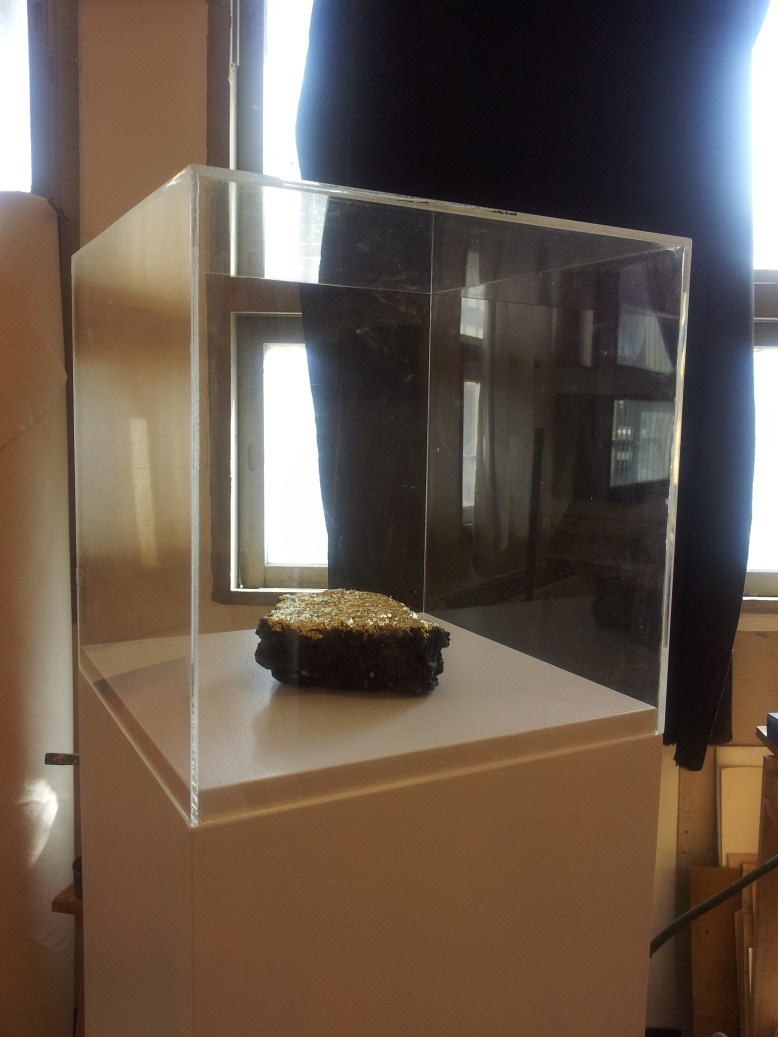
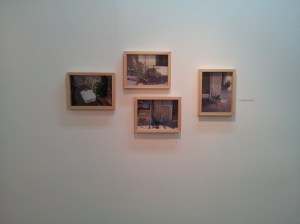
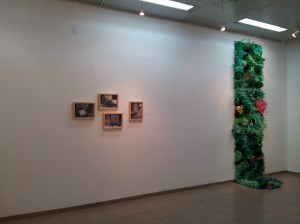
העבודה מסמנת את האספלט כקליפת השכבה הגיאולוגית שהיא מעשה ידי אדם ותוצר תרבות. קליפה מלאכותית של כביש, רחוב, מדרכה.
שכבת עלי מתכת מוזהבים יוצרת מתח בין הדק לעבה, בין העדין לגס, בין החומר הנמוך לגבוה. מה שהיה פסולת גסה מושלכת ומתפוררת הופך לנוצץ זוהר ומפתה.
בתהליך אלכימי מומרים גושי האספלט מפסולת בניין לאובייקט נחשק, מחצב גיאולוגי, אבן טובה.
גושי האספלט נאספים מקומות שונים בארץ והם הבסיס לפרויקט רחב בו יוצגו חלקי אספלט מטופלים ממקומות שונים בארץ ובחו"ל.
Crusts
The work treats the Asphalt as a handmade crust, a cultural waste product. Artificial crust of a road, path or sidewalk
The golden layer of metal leaves creates tension between fine and thick, delicate and rough, low and high. The coarse waste which was discarded and falling apart becomes novel, lustrous and sparkling
In an allegedly alchemical procedure, the Asphalt lumps are being converted into a geological ore, a gem, and an object of desire
The Asphalt lumps are collected from different location in Israel
This is a project in process, intends to use Asphalt lumps from Israel and abroad
Art without artists | Gardens without landscape architects | Multiplicity
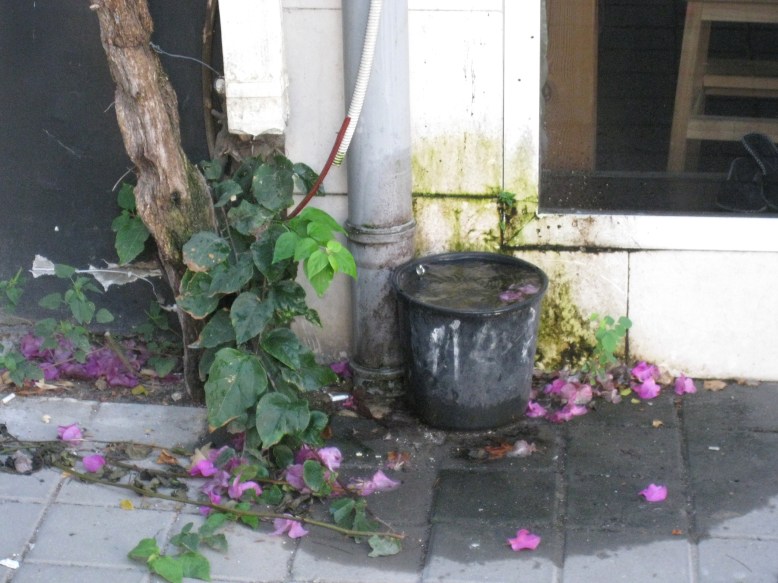
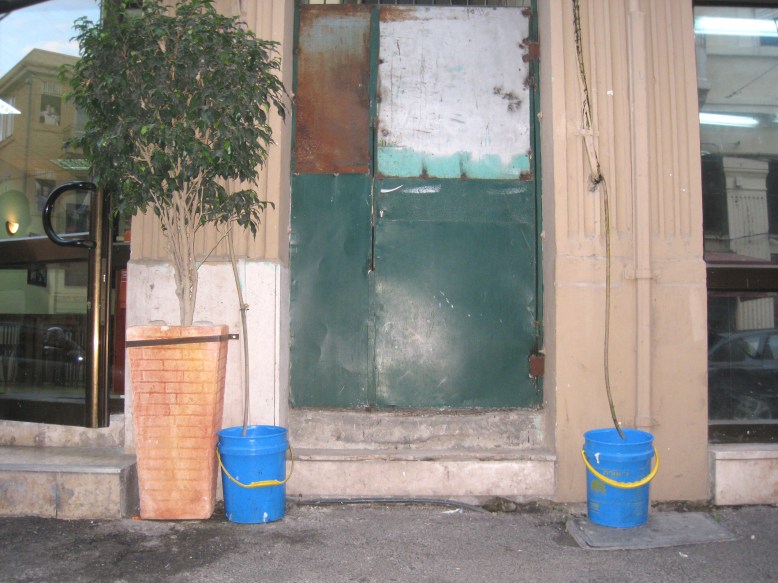
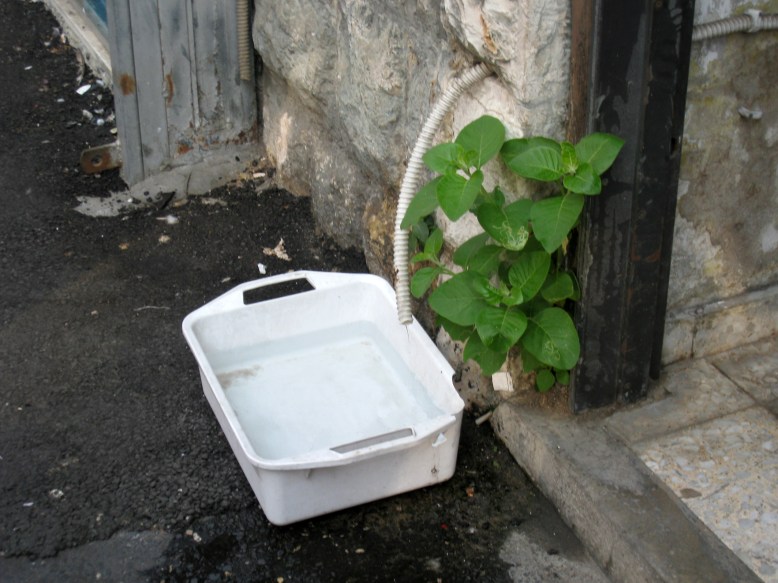
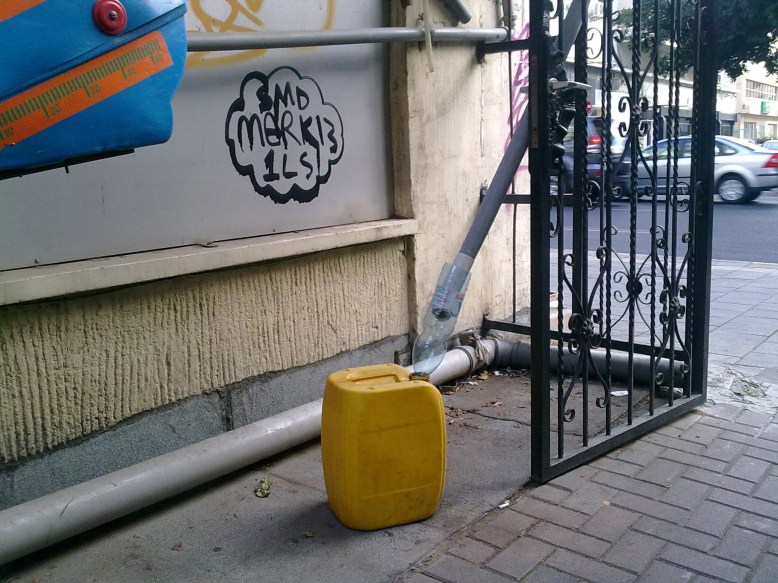
Plastic bottles, containers, buckets, and tin cans are used everywhere to collect excess water from air-conditioners. The purified lucid water fills these containers to the brim, overflowing onto the sidewalk.
Water | Flora | Garden | Ephemerality
The water's movement creates circular ripples. The delicate sound of dripping is barely heard through the city hustle, it makes you stop and listen. The water creates isles of life in places it did not exist before. These ponds spot the cityscape with intense color, becoming part of the enduring order of the city's open space.
Faded yellowish-green weeds, intense bright green moss, the wild and ferocious Ficus Religiosa and Nicotiana Glauca, all flourish – in spite of the harsh conditions – thanks to water from the sidewalk ponds.
While ponds and fountains constitute the heart of the garden and one of its highlights, I regard these sidewalk ponds as miniature mobile water gardens set in the urban environment. This hermeneutic concept perceives streets, passages, and other urban spaces as a contemporary garden, one made up from a chain of mini-fountains located on city streets, shops, restaurants, and building entrances.
This concept refers to the grotesque fountains of the Renaissance and Baroque garden along with contemporary new-urbanism theories which emphasize sustainability, community, and personalization of public spaces.
Sidewalk ponds are as much a part of summer as natural puddles are of winter; a source of seasonal renewable life. The garden is as expendable as the containers themselves which are discarded when they decay or are no longer necessary. While some of the flora would have already rooted, some will vanish, until next spring.
Art without Artists
Sidewalk ponds are environmental ephemeral site specific installations. It is an unknowingly practical virtuosic intervention in the site/environment. This is a dual use of the ready-made idea: first a secondary, ecological use of the containers, next, a hermeneutic interpretation of the practical solution as a work of art, site specific installation, a garden.
Sidewalk Ponds and the Multiplicity
The diversity of this phenomenon enables me to interpret it also as an extension of multiplicity. Multiplicity is not the multiplication of something, or a lot of the same thing. The multitude, an evasive idea, is a significant category in the post-modern, philosophical, and critical discourses. Interpreting sidewalk ponds as a phenomenon of multiplicity bears a post-modern attitude that wishes to highlight the various means of subjective expression that materialize when people intervene with their environment and enrich the urban texture.
In this documentary project I wish to point out the beauty of multiplicity in its diversity and entropy. Leaving sidewalk ponds unorganized and un-designed – as opposed to inventing some overdesigned industrial architectonic solution – is to show them as poetic situations, representing life, creativity, and personification, and thus to enable us the freedom of innovation.
Tags: garden, water garden, ponds, air-condition water, art, site specific installation, landscape-urbanism, baroque and renaissance garden, grotesque, art without artists, multiplicity.
מתוך התערוכה 'הפרח בגני', גלרית לב הפארק רעננה, אוצרת: רותי חינסקי-אמיתי 2014
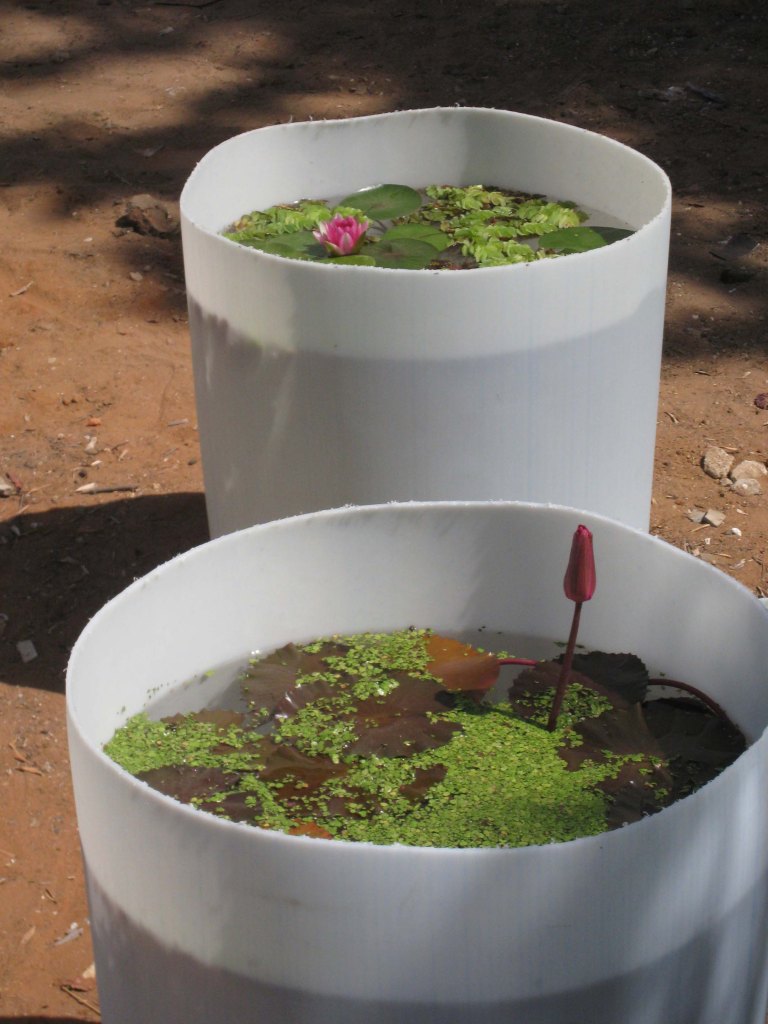
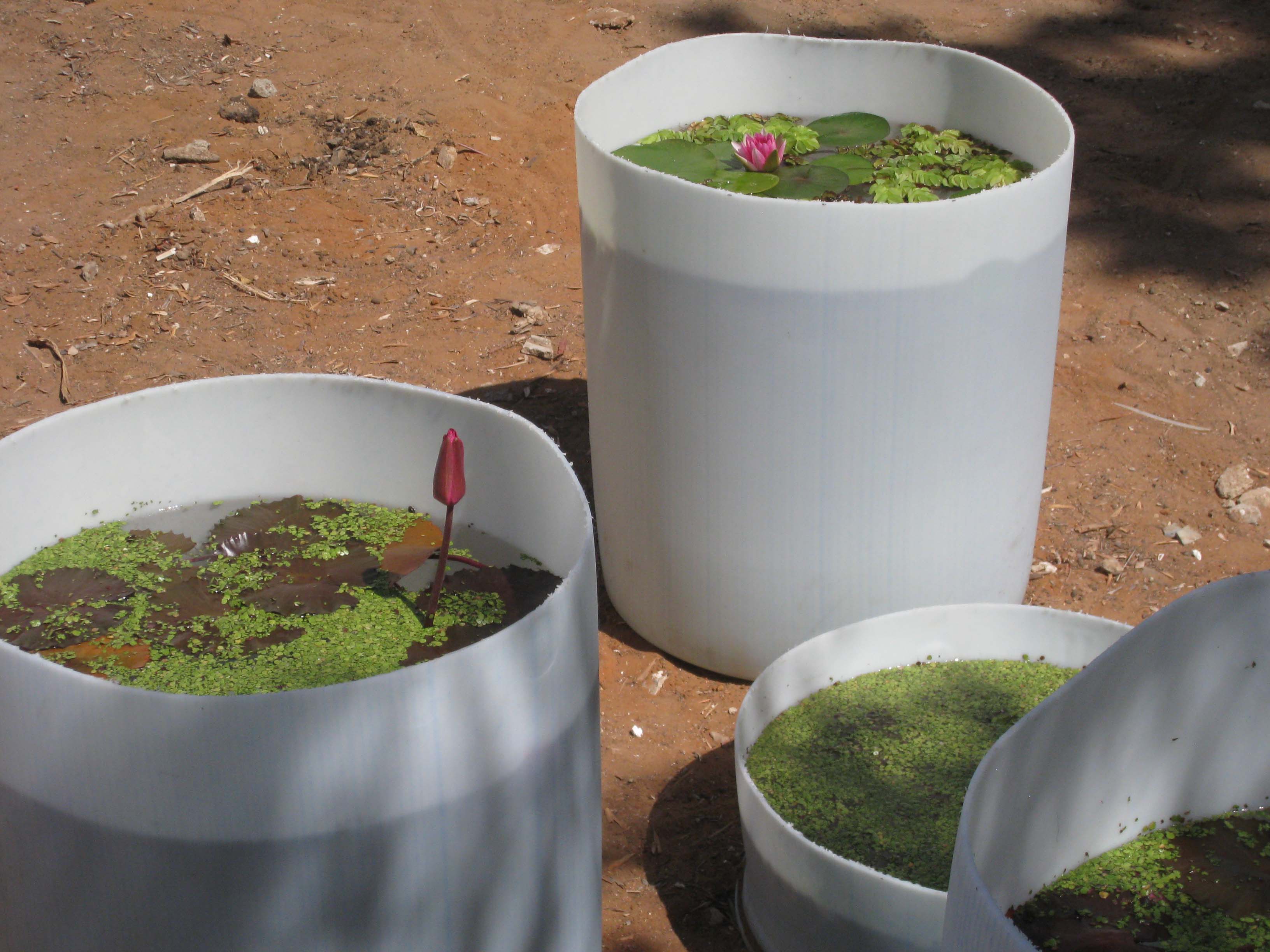
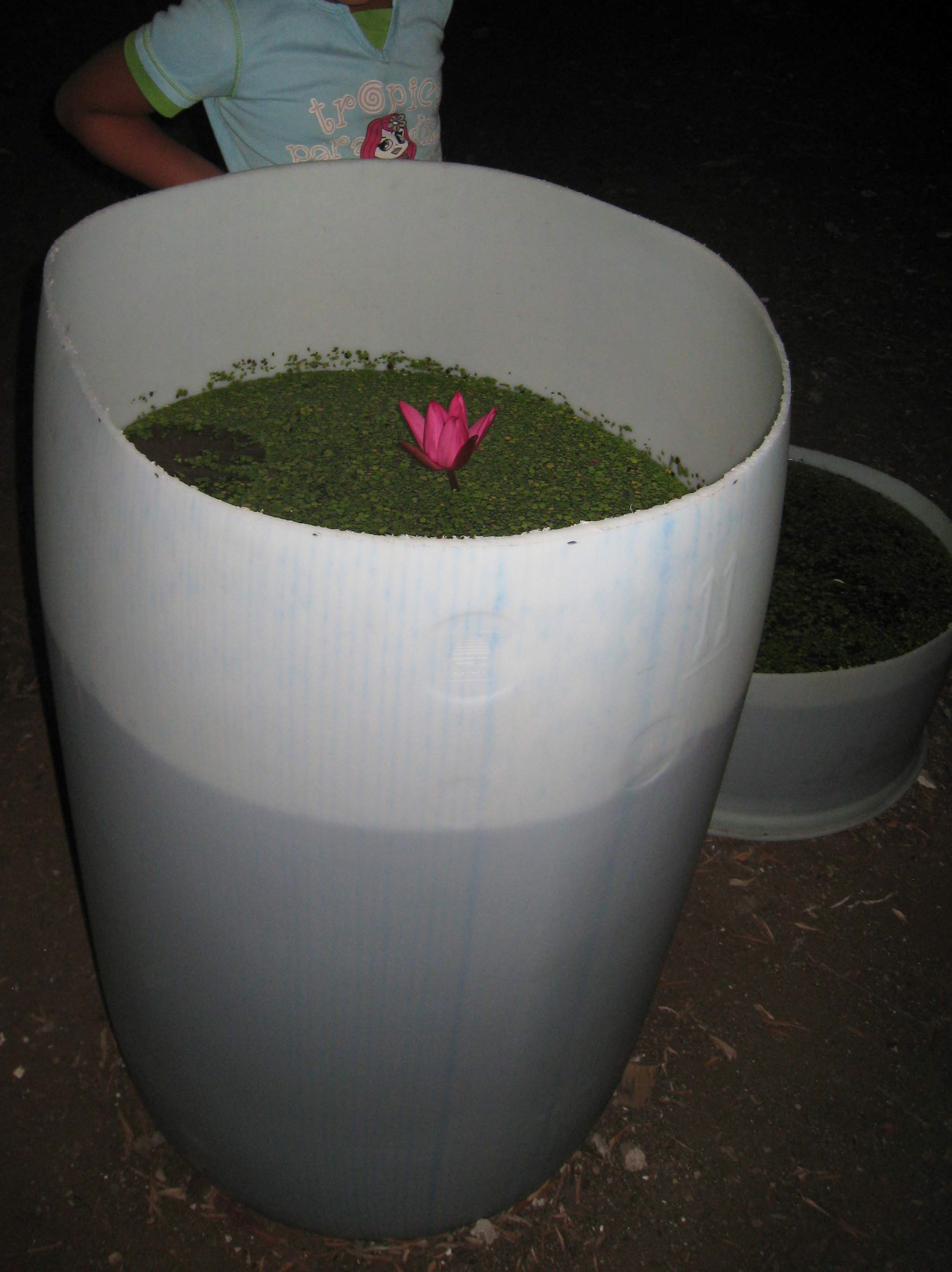
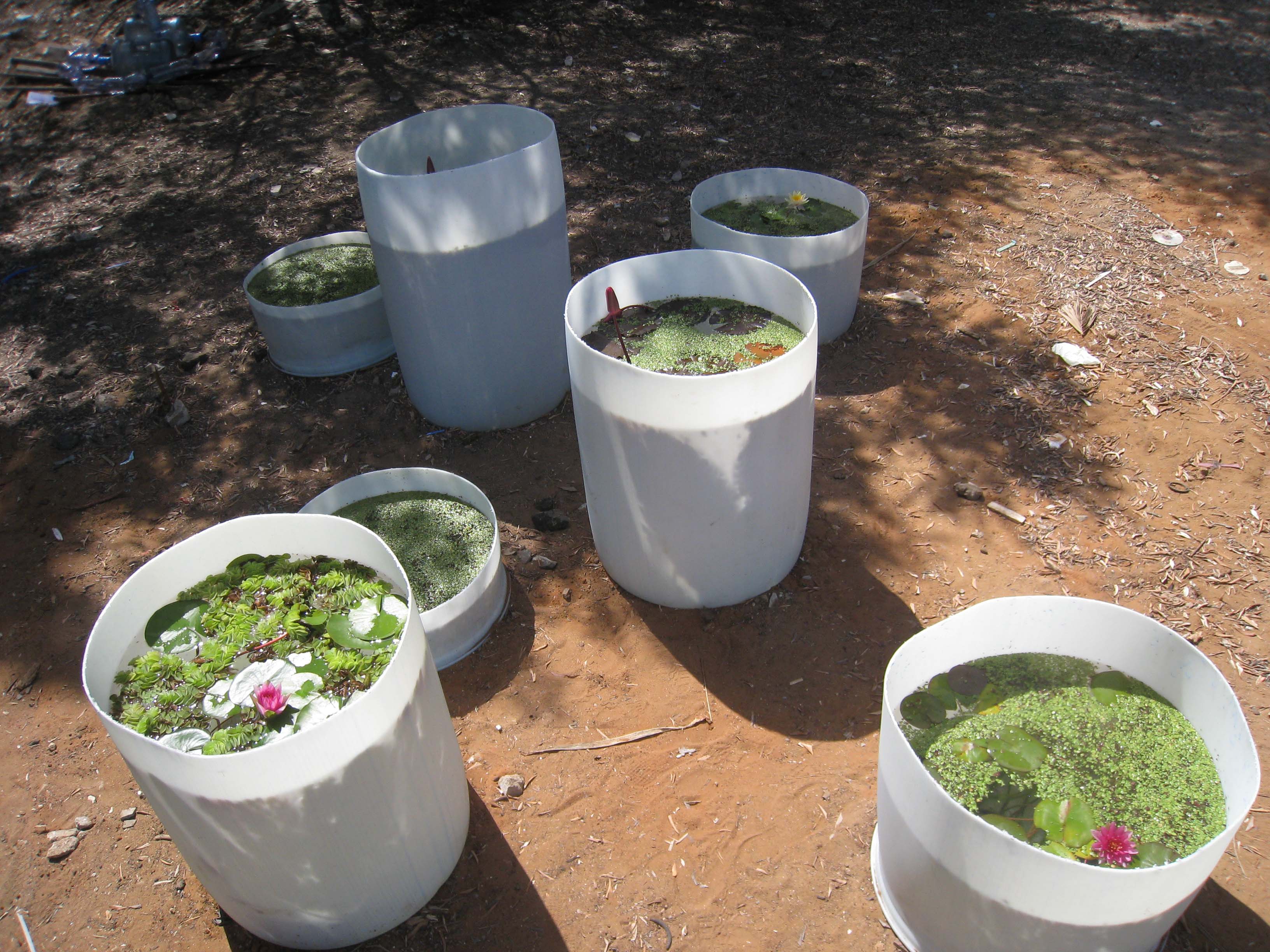
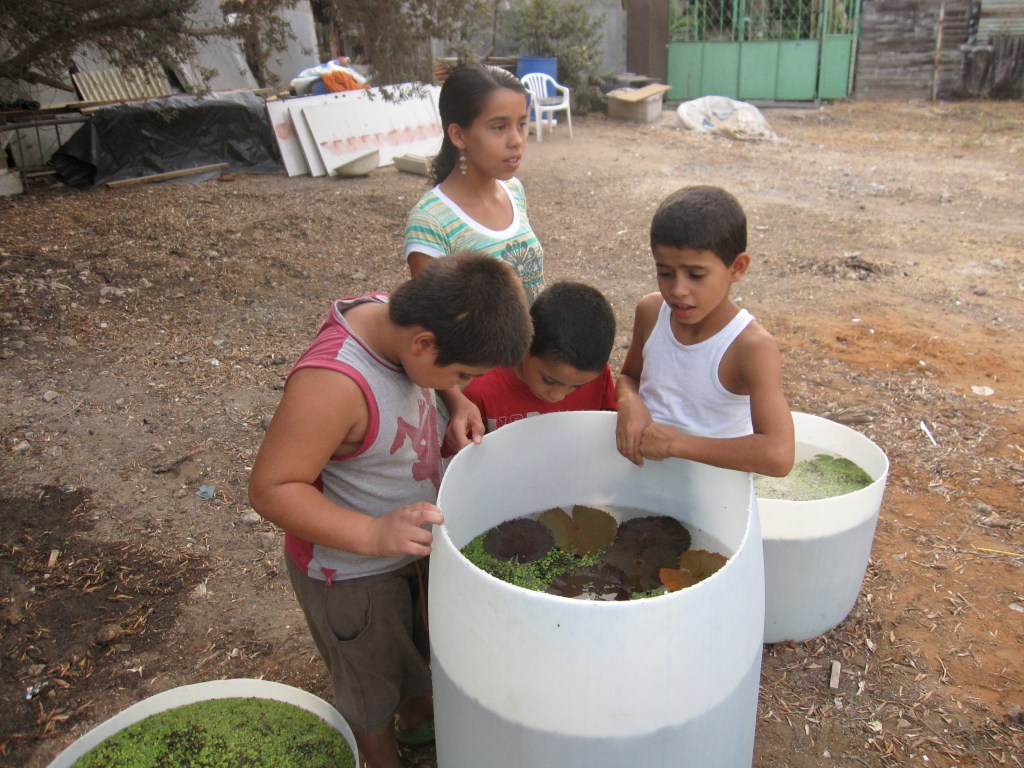
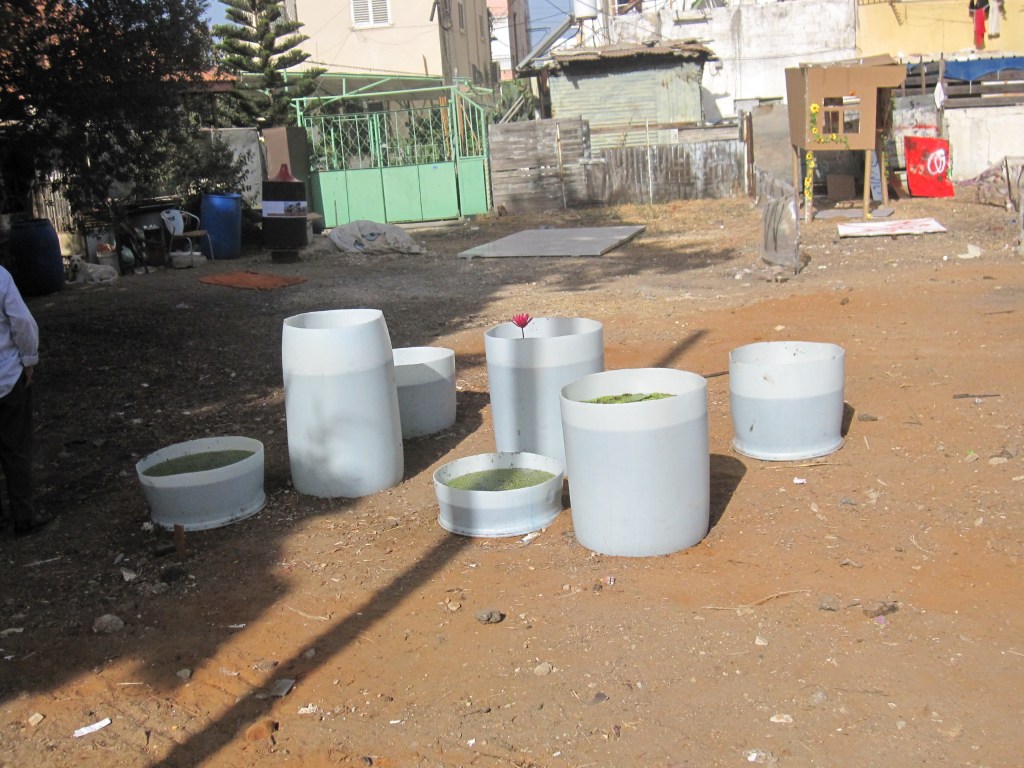
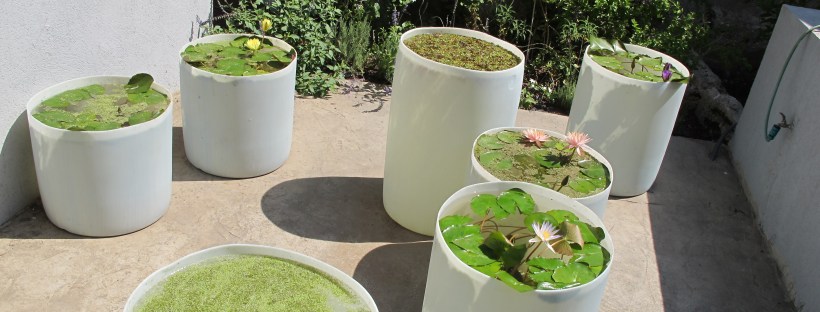
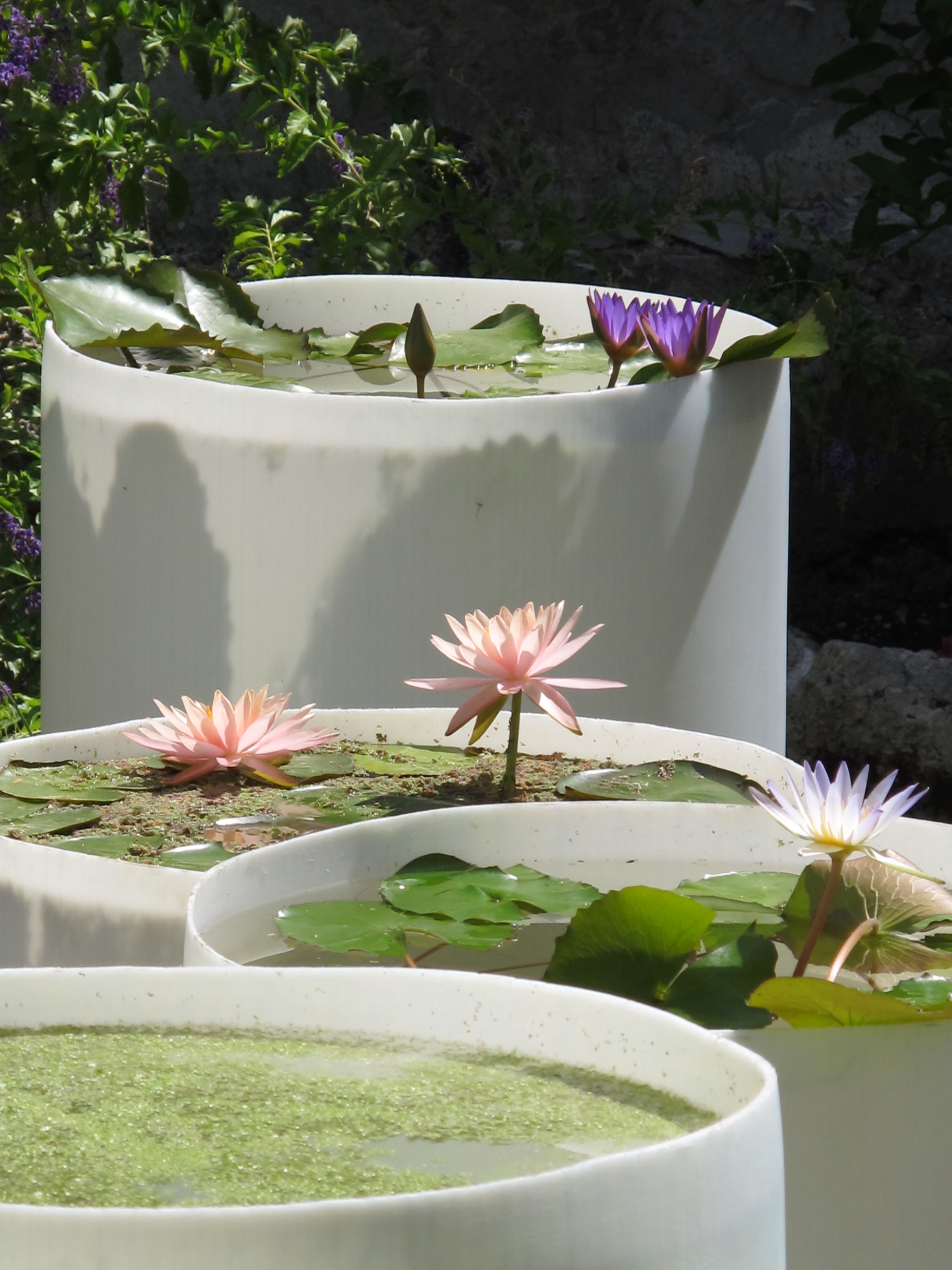
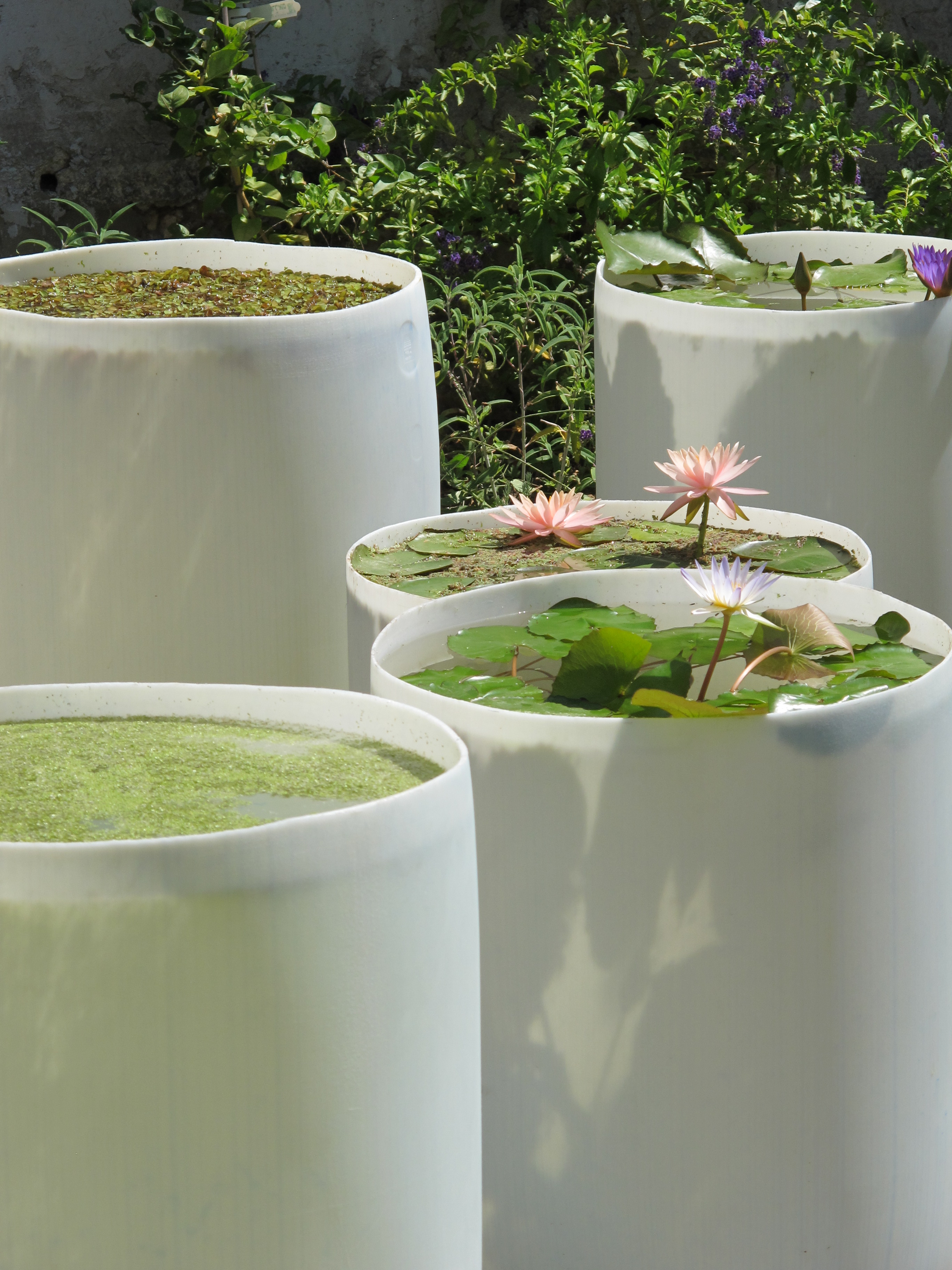
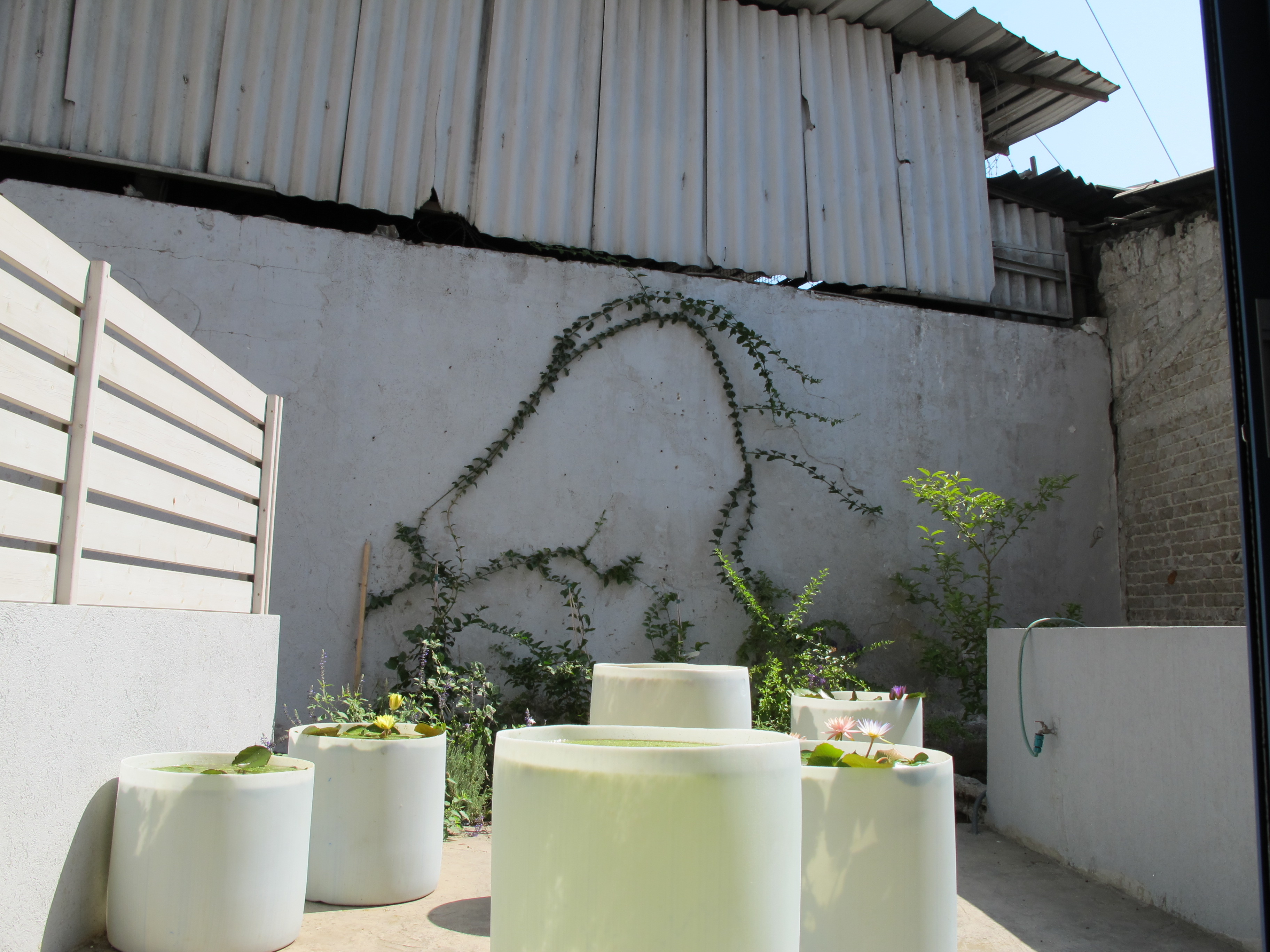
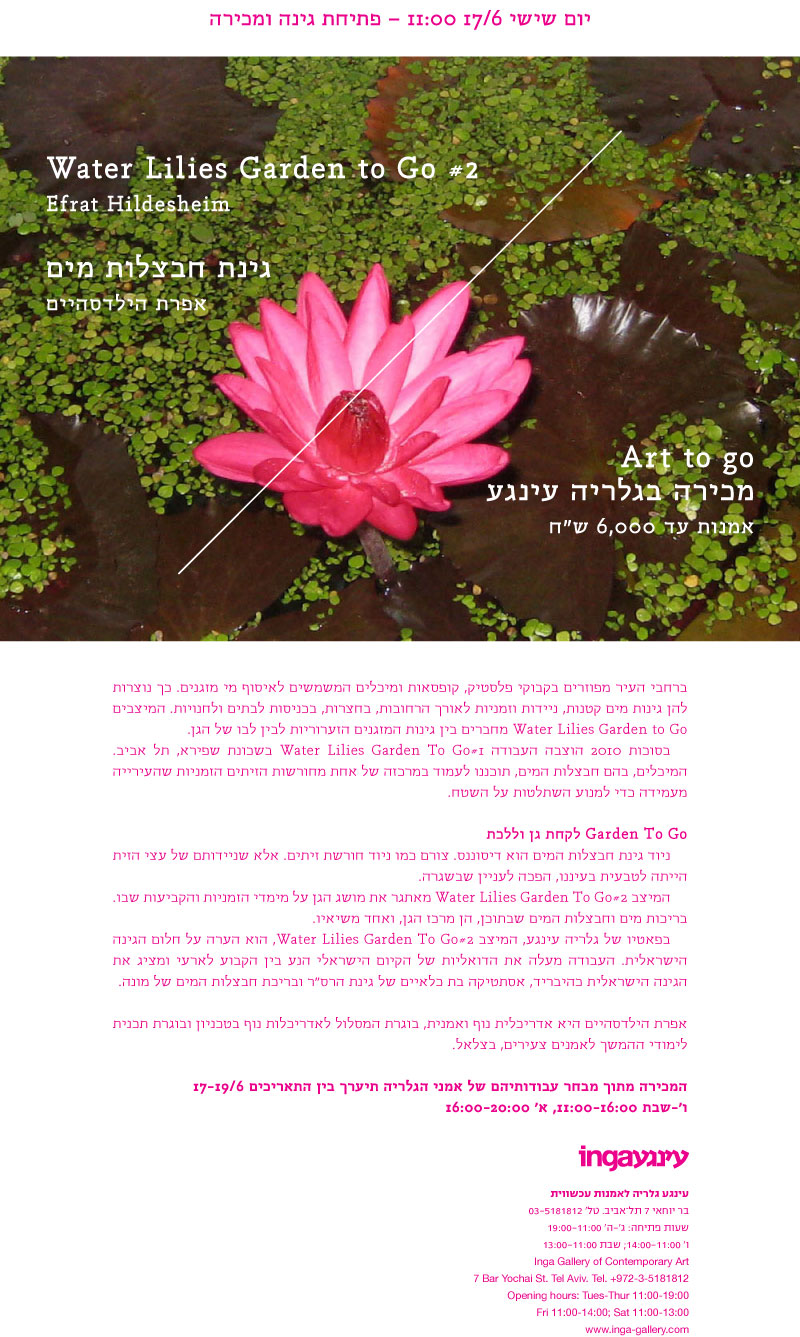
על זמני וקבוע – גינת חבצלות מים בשכונת שפירא | ספטמבר 2010 בשכונת שפירא 2010 צצו לפתע חורשות זיתים. העיריה העמידה את חורשות הזיתים החדשות במקום בו היא פינתה מבנים ומחסנים ורכוש של תושבים שלדבריה תפסו חזקה על שטח ציבורי. הזיתים שנתלשו ממקום אחד הועמדו במקום אחר, ממנו נתלשו אחרים. חורשות הזיתיים הוכרזו כזמניות וכשטחי ציבור פתוחים (שצ"פים). חורשות אלו משמשות לא פעם אמצעי לתפיסה מחדש של שטח עלידי הרשויות. תכונתיו של עץ הזית המאפשרות העתקה עומדות אל מול האיקוניות שלו כסמל מקומי לשורשיות וולקשר עם המקום. חורשות הזיתים הם גן זמני. בסוכות 2010 הוצבה העבודה Water Lilies Garden To Go#1 בשכונת שפירא, תל אביב. המיכלים, בהם חבצלות המים, תוכננו לעמוד במרכזה של אחת מאותן חורשות הזיתים הזמניות שהעירייה מעמידה. העל-זמני הוא בבסיס ההוויה של הגן. בין מרכיבי הגן הקבועים, שאינם ניתנים להזזה, נמצאות בריכות מים ובתוכן חבצלות המים. אלו היו מאז ומתמיד גולת הכותרת של הגן ומרכזו. ניוד גינת חבצלות המים הוא דיסוננס. צורם כמו ניוד חורשת זיתים. אלא שניידותם של עצי הזית הייתה לטבעית בעיננו, הפכה לעניין שבשגרה.Garden To Go לקחת גן וללכת. המיכלים המשומשים זרוקים ומפוזרים ברחבי העיר ומשמשים פעמים רבות לאיסוף מי מזגנים. הבריכות הקטנות, עם הטחב והירוקת, הופכות את החלל סביבן לגן. כך נוצרות להן גינות מים קטנות, ניידות וזמניות. אלו הופכים להיות מרכזו של הגן הנייד במגרש הריק במרכז שכונת שפירא מעמת המיצב Water Lilies Garden To Go#1 בין הזמני לקבוע, בין הגבוה לנמוך ובין הנדיר ליומיומי.
Plastic bottles and containers are all over, being used to collect wasted air condition water. I see them as miniature mobile water gardens on the cityscape: streets, shops, restaurants, and nearby building entrances. The installations Water Lilies Garden to Go draw on the notion of those miniature pond .gardens, and the concept of water ponds with water lilies as the core of the classic garden
In October 2010 the installation Water Lilies Garden to Go #1 was installed in the Shapira neighborhood in Tel Aviv, populated by work migrants and asylum seekers mainly from Africa. The containers with the Water Lilies were to be situated in the heart of an Olive grove. A temporary Olive grove that was hastily planted by the city municipality, in order to prevent unlawful seizure
Garden to go
Mobilizing Water Lilies garden is a paradox, a contradiction in terms. A strident political act similar to the mobilization of an Olive grove. Nevertheless, uprooting and displacing Olive trees, has become a routine
Ars poetic Garden
Water Lilies Garden to Go #2 is a reflexive comment that challenges the concept of the garden. It emphasizes the tension between permanence and immobility on one hand, and ethereality and temporality on the other hand, as a water lilies pond and olive groves are at the heart of the garden
The garden is a hybrid
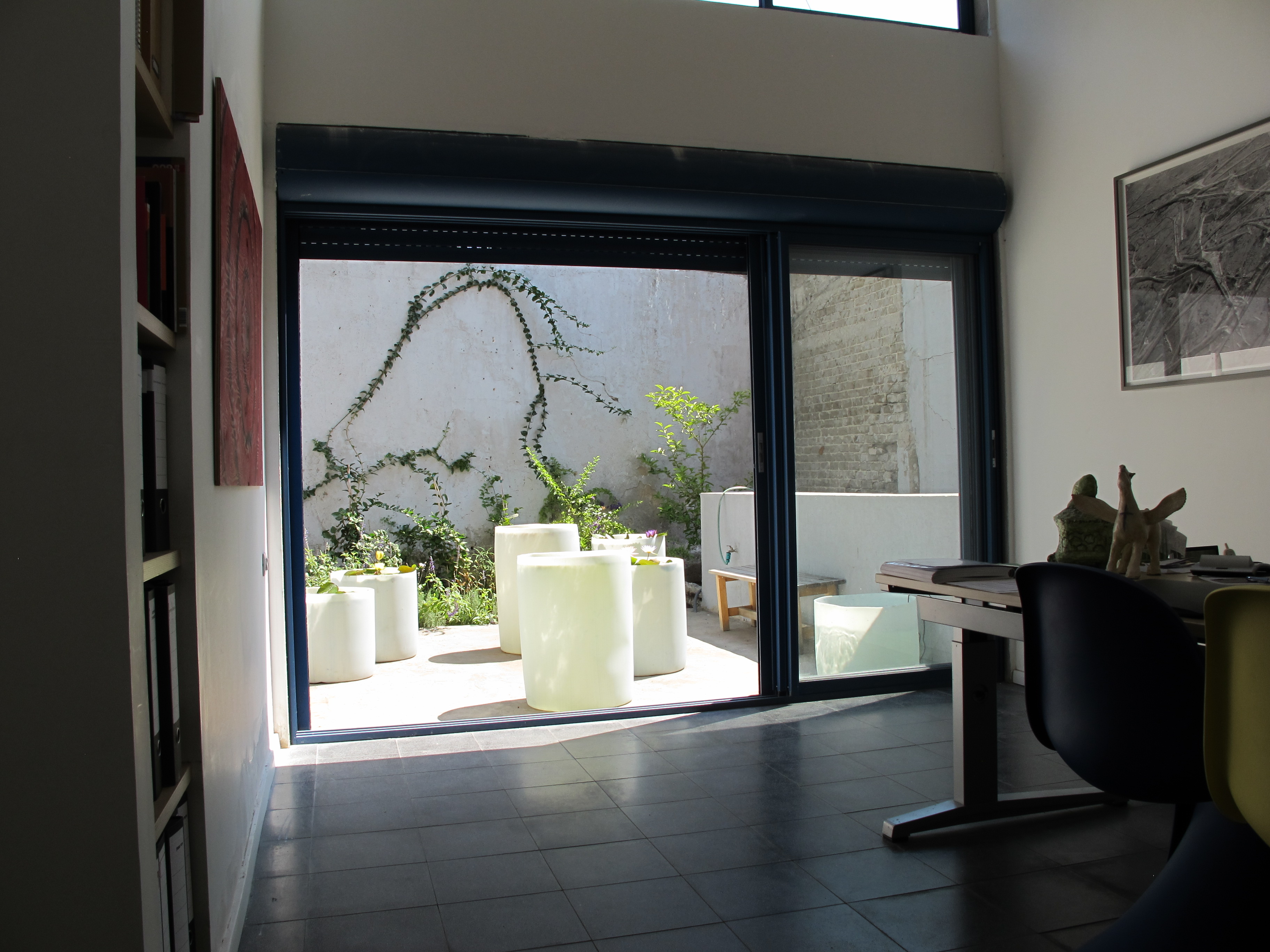
On the inner court of Inga Gallery in Tel Aviv, Water Lilies Garden to Go #2 is an interpretation of the Israeli dream of a private garden. The installation points to the duality of Israeli existence that alternates between the stable and the ephemeral. The installation addresses the Israeli garden, with its promiscuous aesthetic, as a hybrid of an army base garden and Monet's Water Lilies garden
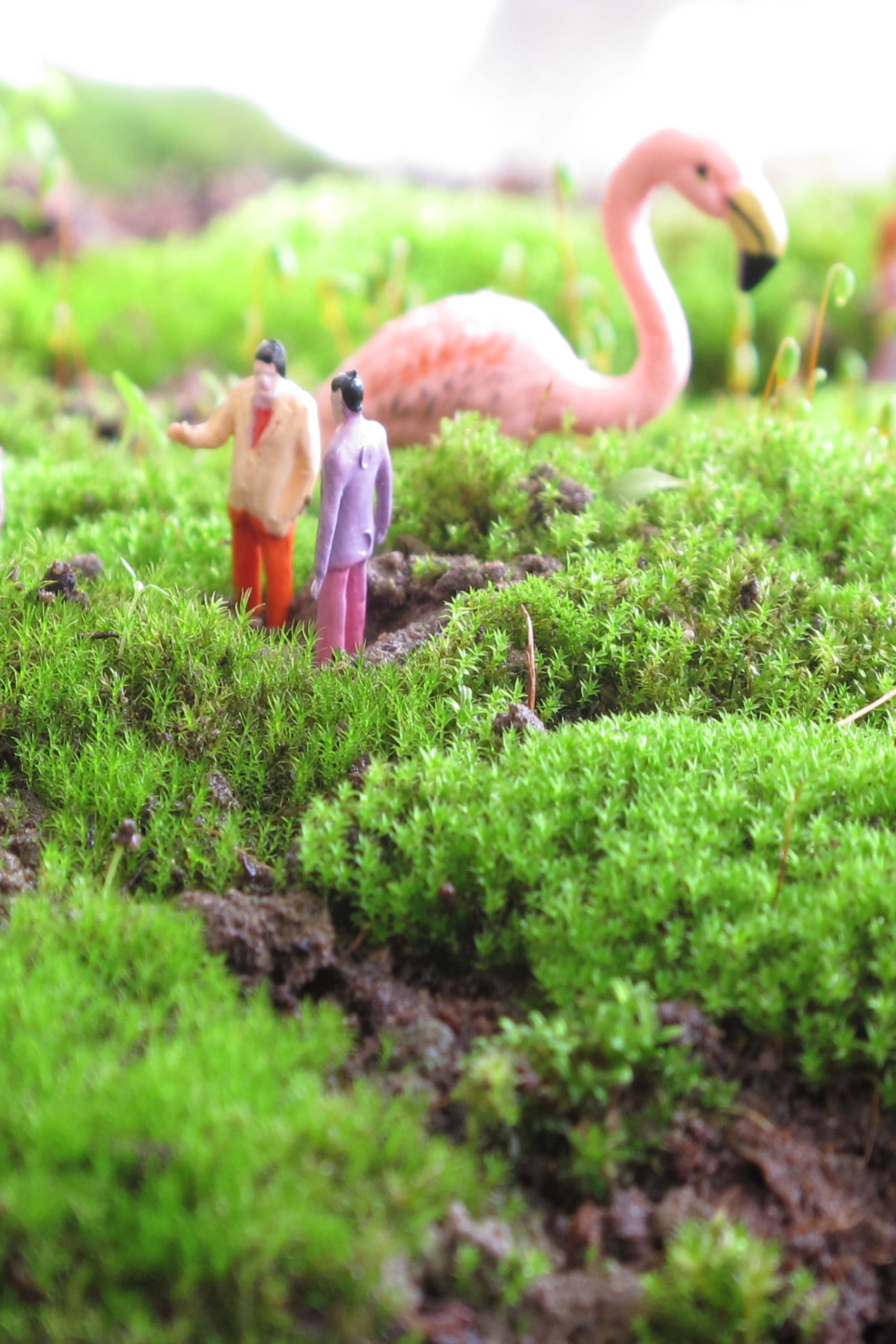
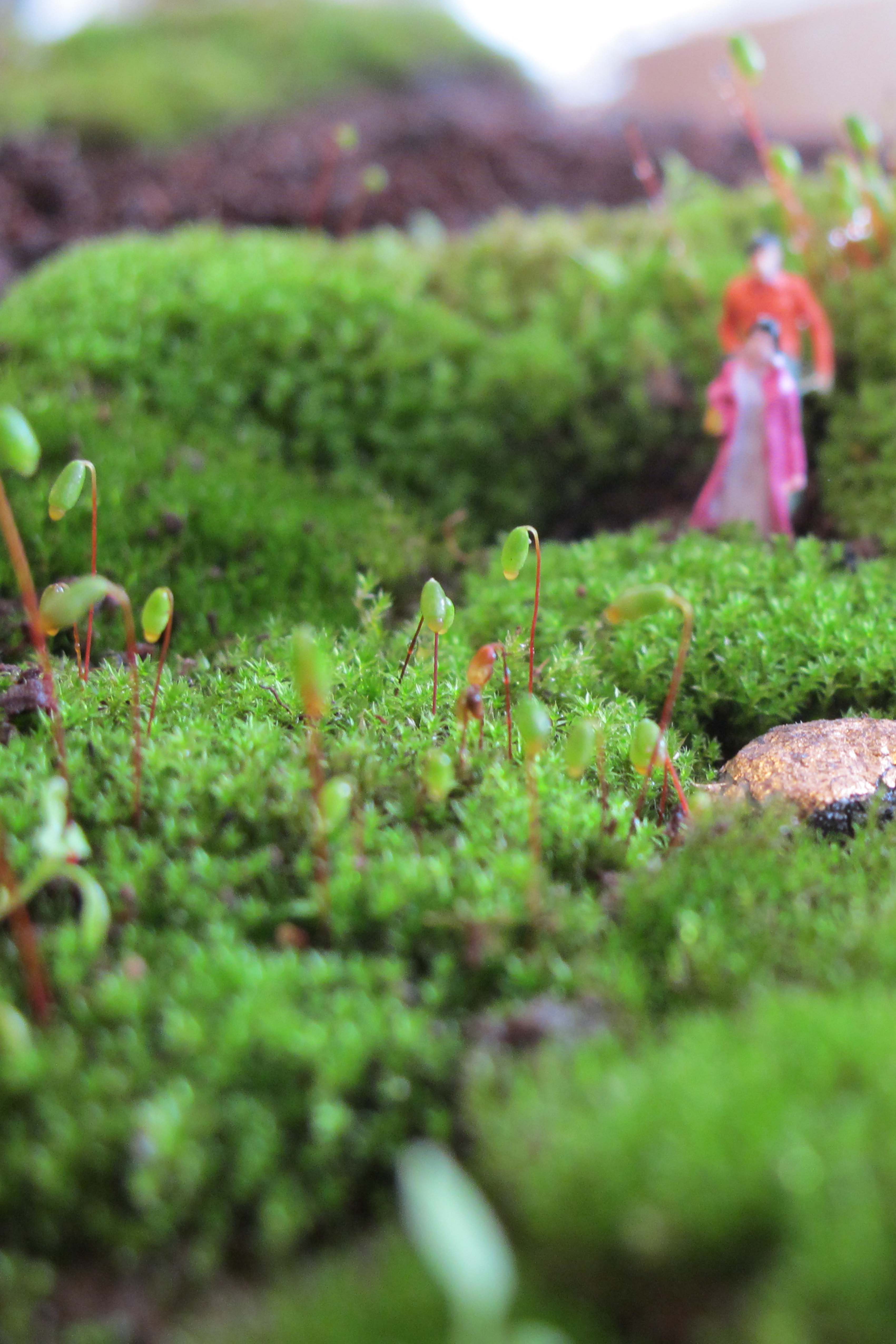
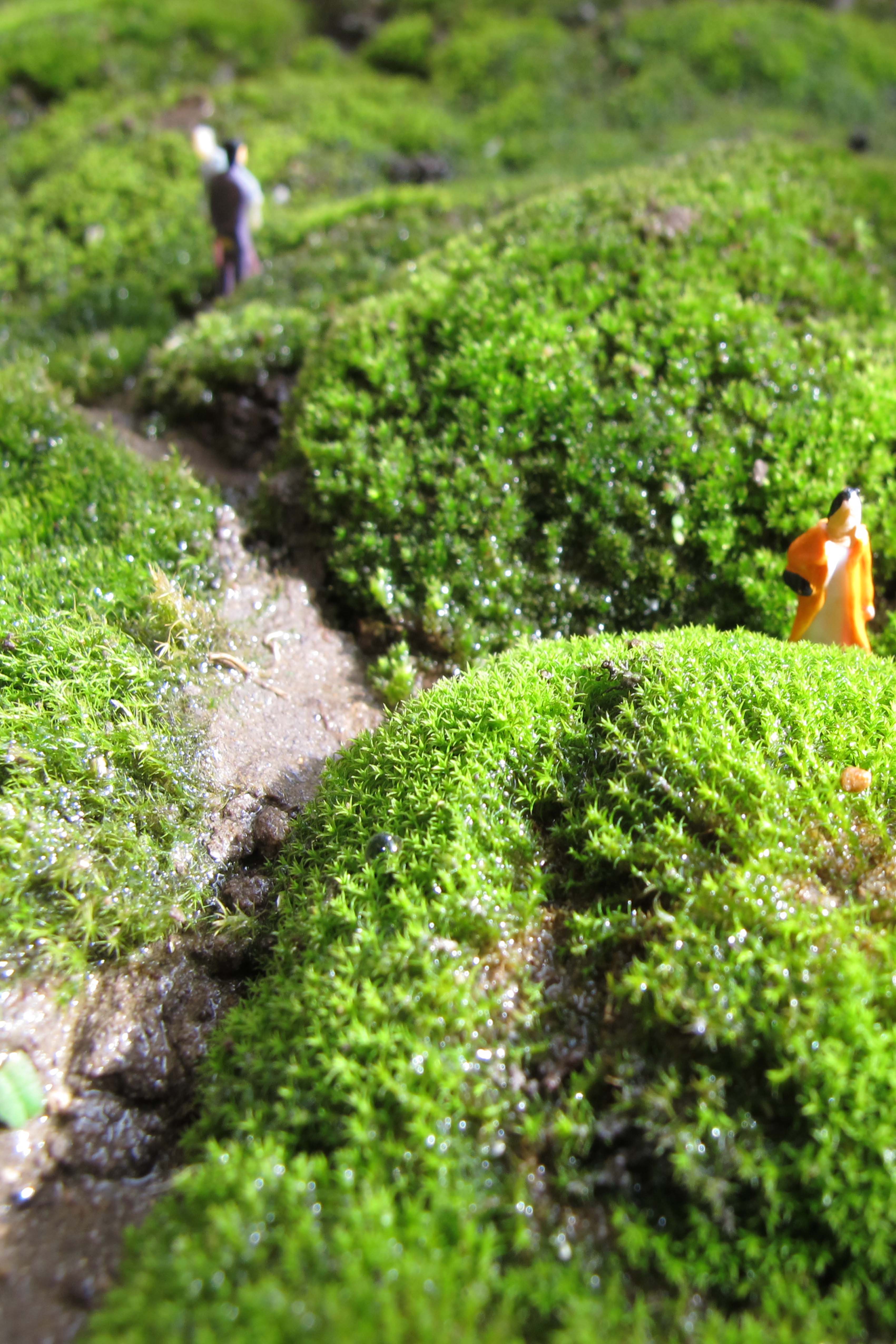
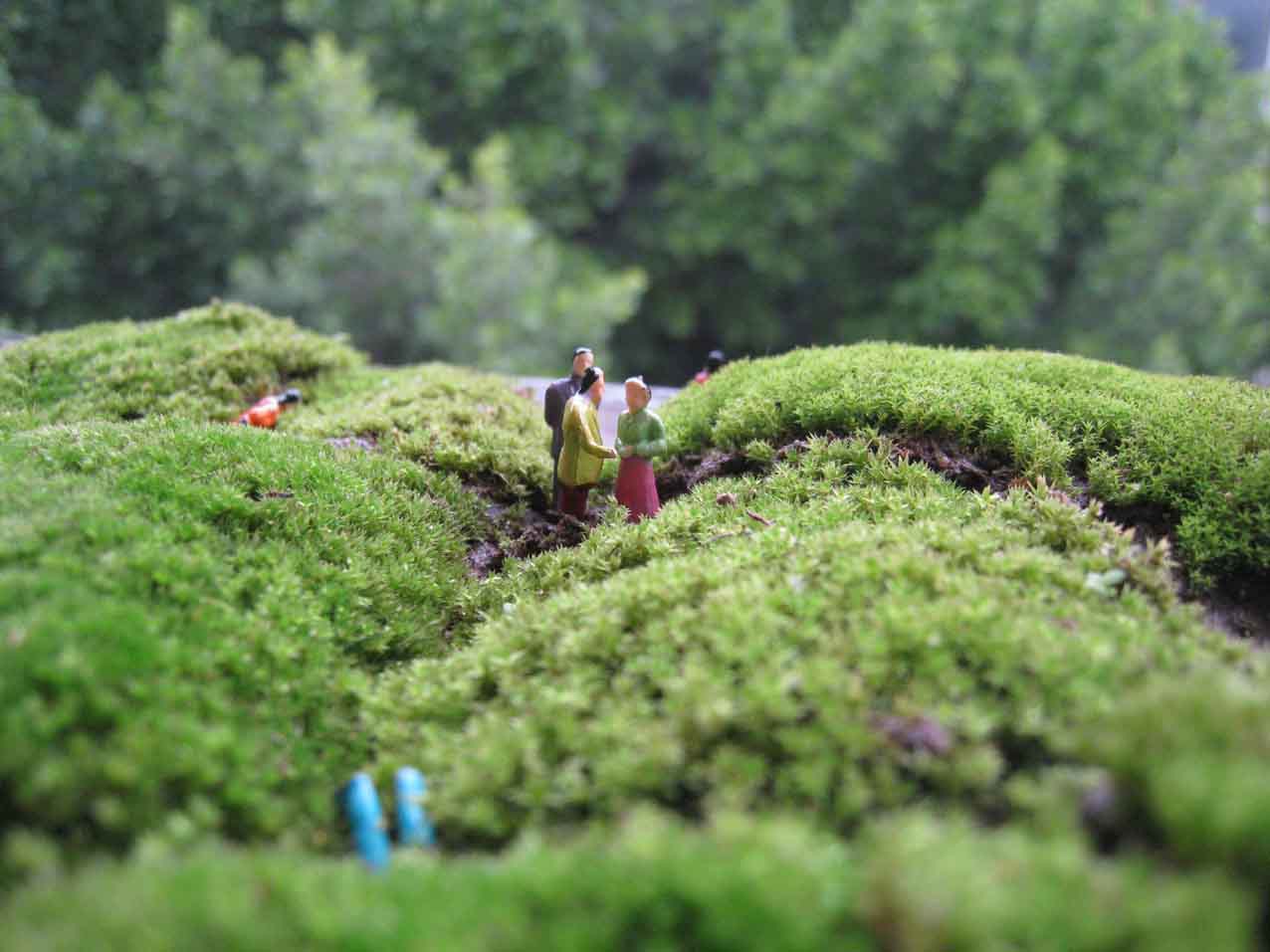
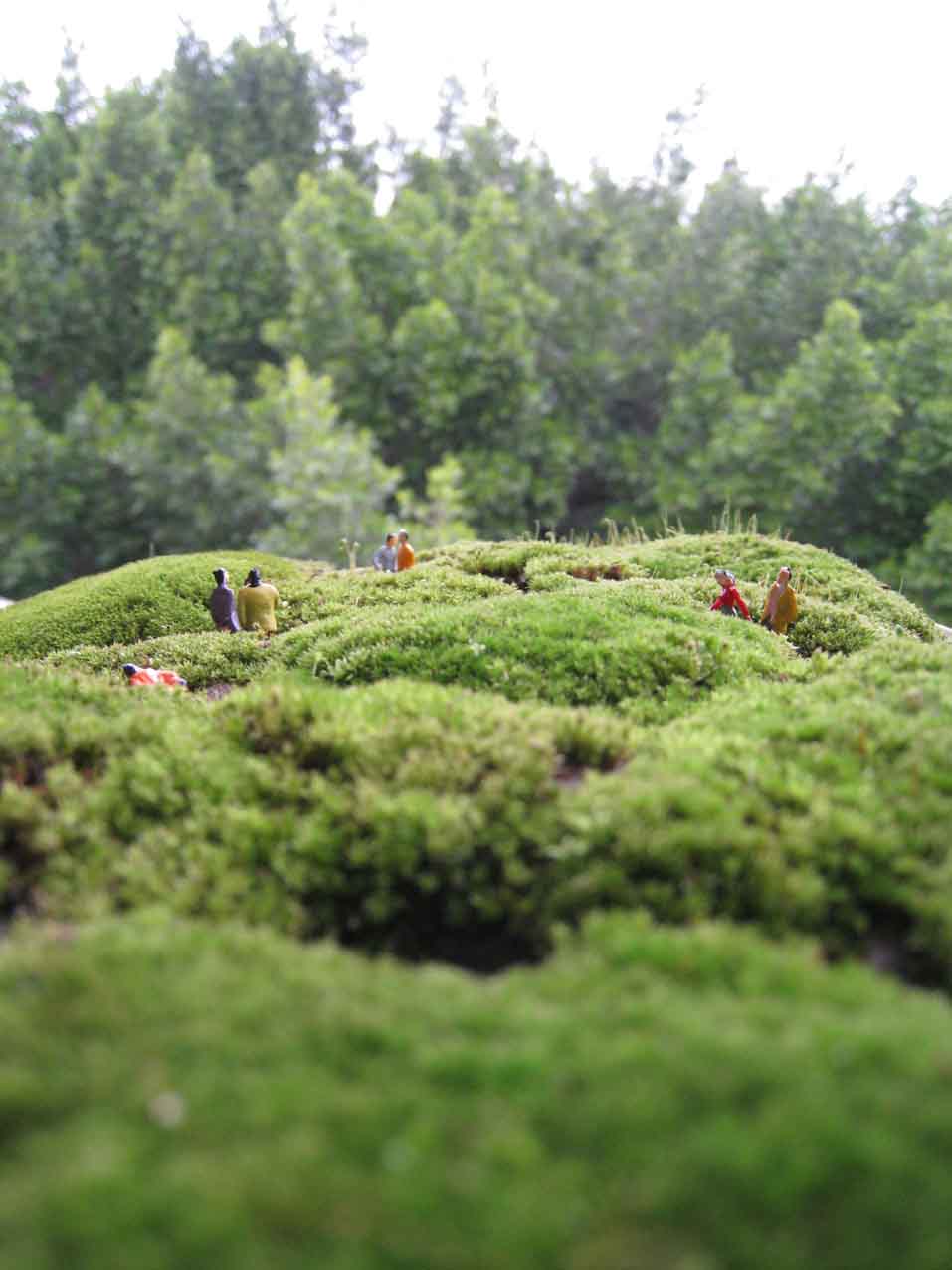
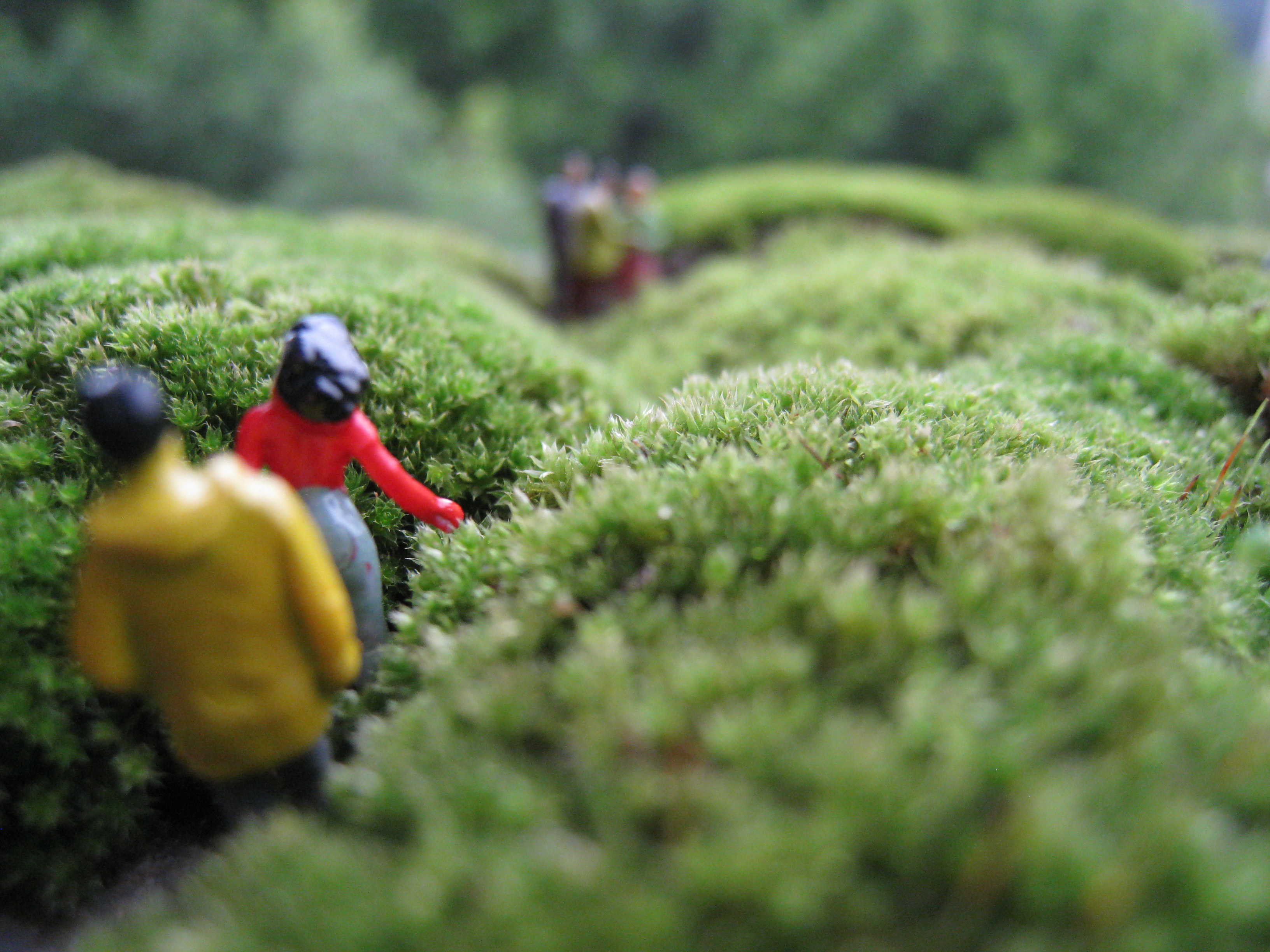
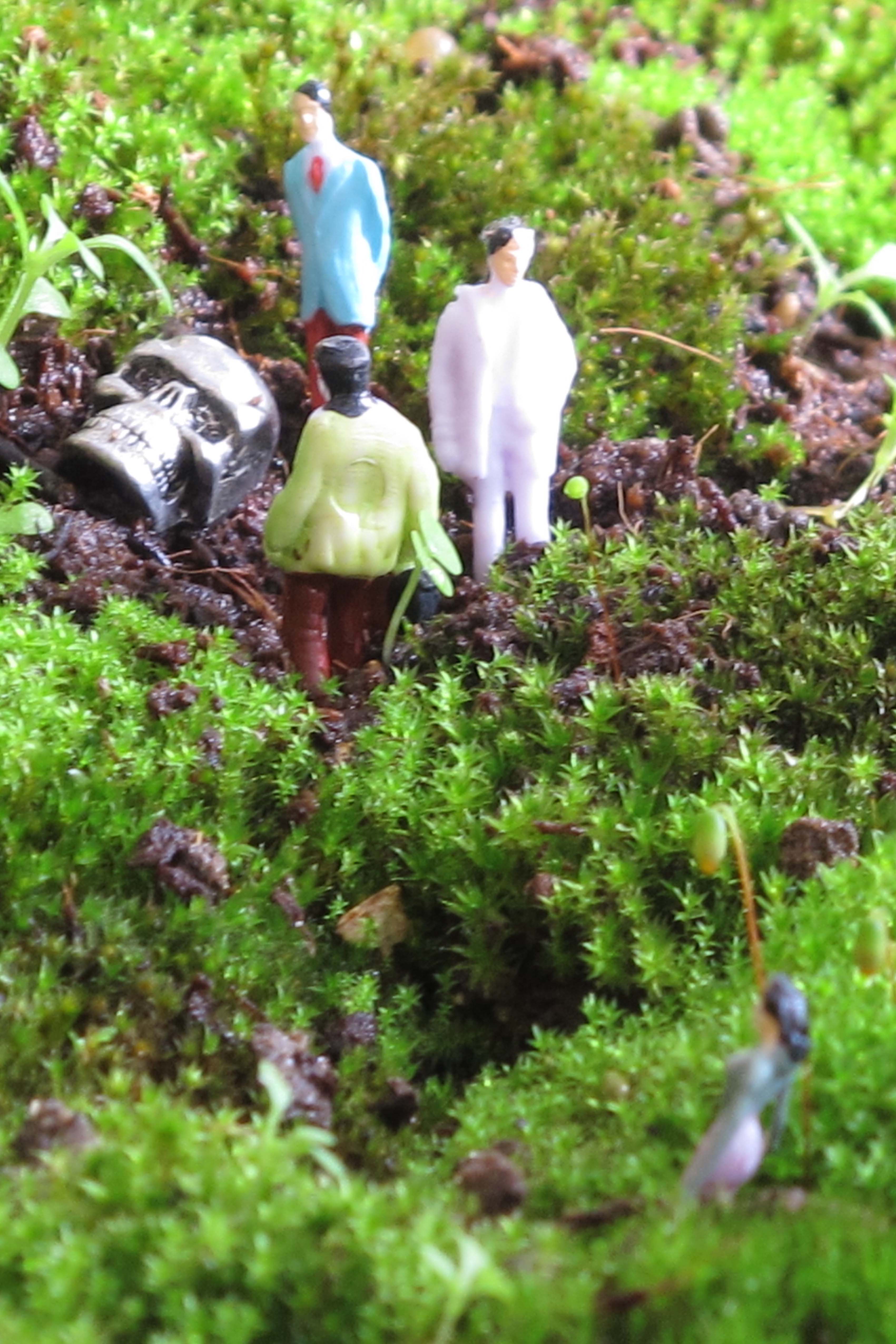
Mosscape Non-Place. 2010 Moss Bryum, soil, ready-made objects
The Mosscape Non-Place, crafted from Moss Bryum, soil, and ready-made objects, offers an enchanting miniature moss garden that conjures an imaginary landscape, as a site for whimsical dark occurrences. Set as a non-place devoid of scale, it evokes an architectural model, a simulation of a garden without origin.
As the 'real' size of the moss dissolves into the lush green backdrop of woodlands, forming a landscape of sculpted topography, damp soil, human-scale figurines, and other objects, the viewer becomes disoriented, caught in a surreal blend of perceptions.
Mosses are a unique form of living, perpetually regenerating the transition between their erotic green spreading, soft, furry, slimy performance and their Thanatos summer performance of spiky dry yellowish mats. The moss garden's landscape thus oscillates between these two states, creating an alluring yet repulsive texture, and setting the stage for a twilight zone of sorts.
Set in a multi-layered narrative, this landscape, neither entirely natural nor artificial, challenges conventional dichotomies surrounding size, scale, and nature. It unfolds the in-between as a viable and intriguing option.
Garden installation in 'Other People’s Problems: Conflicts and Paradoxes' | curated by Doreet Levitte Harten and Dalia Levin | September- December 2013 | Herzliya Museum of Contemporary Art
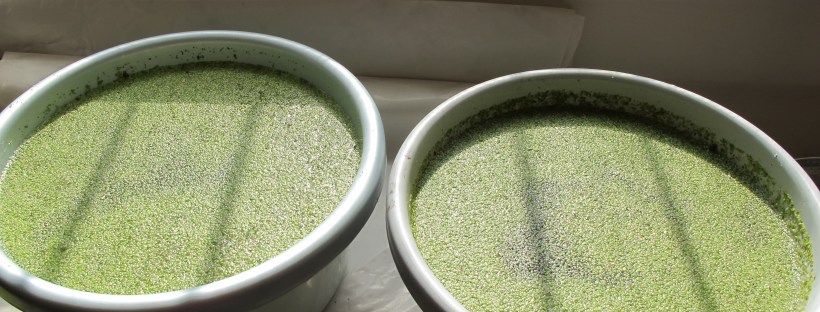
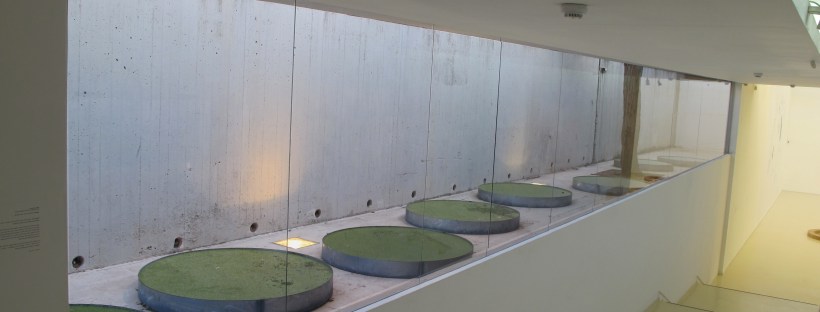
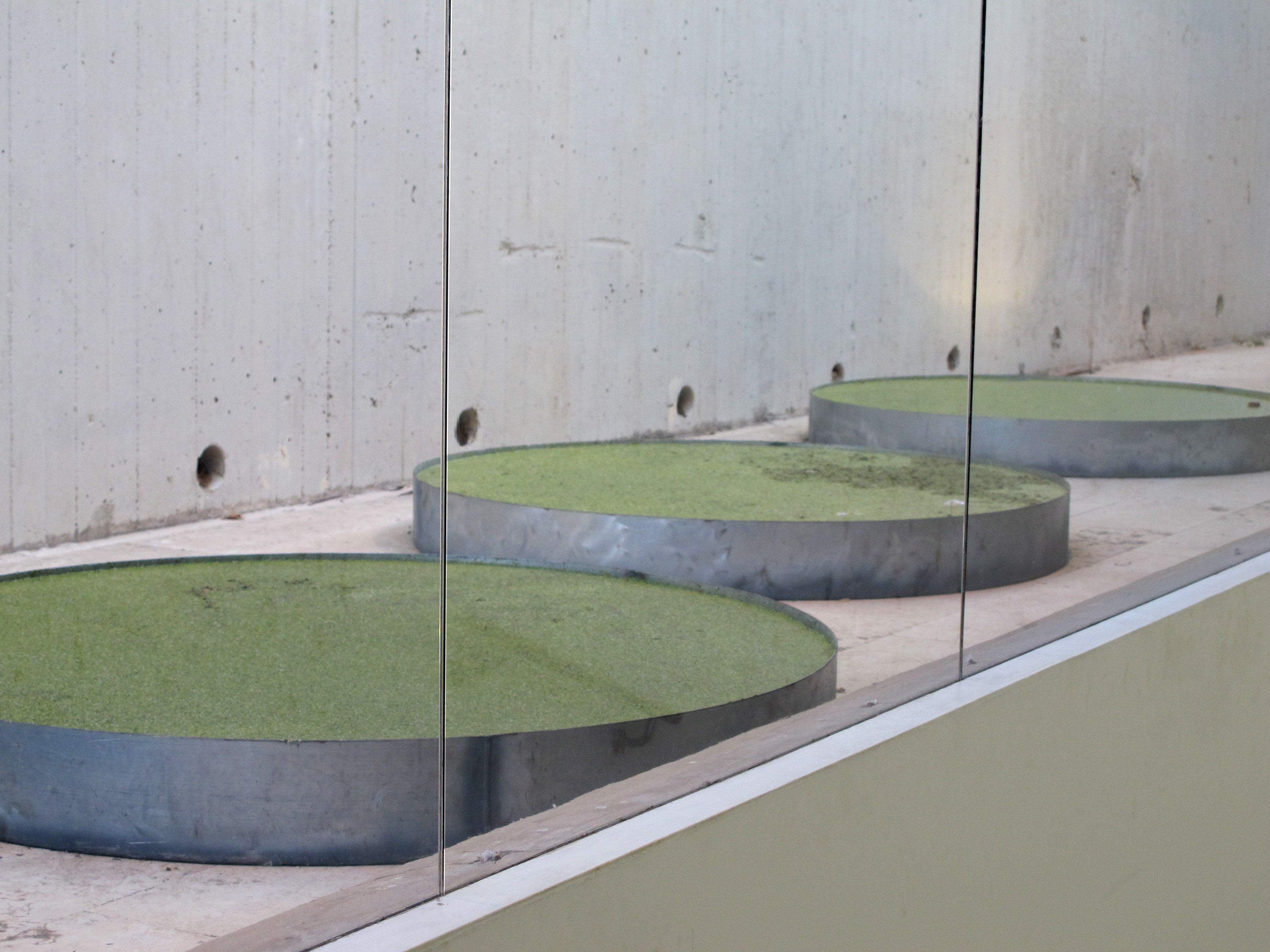
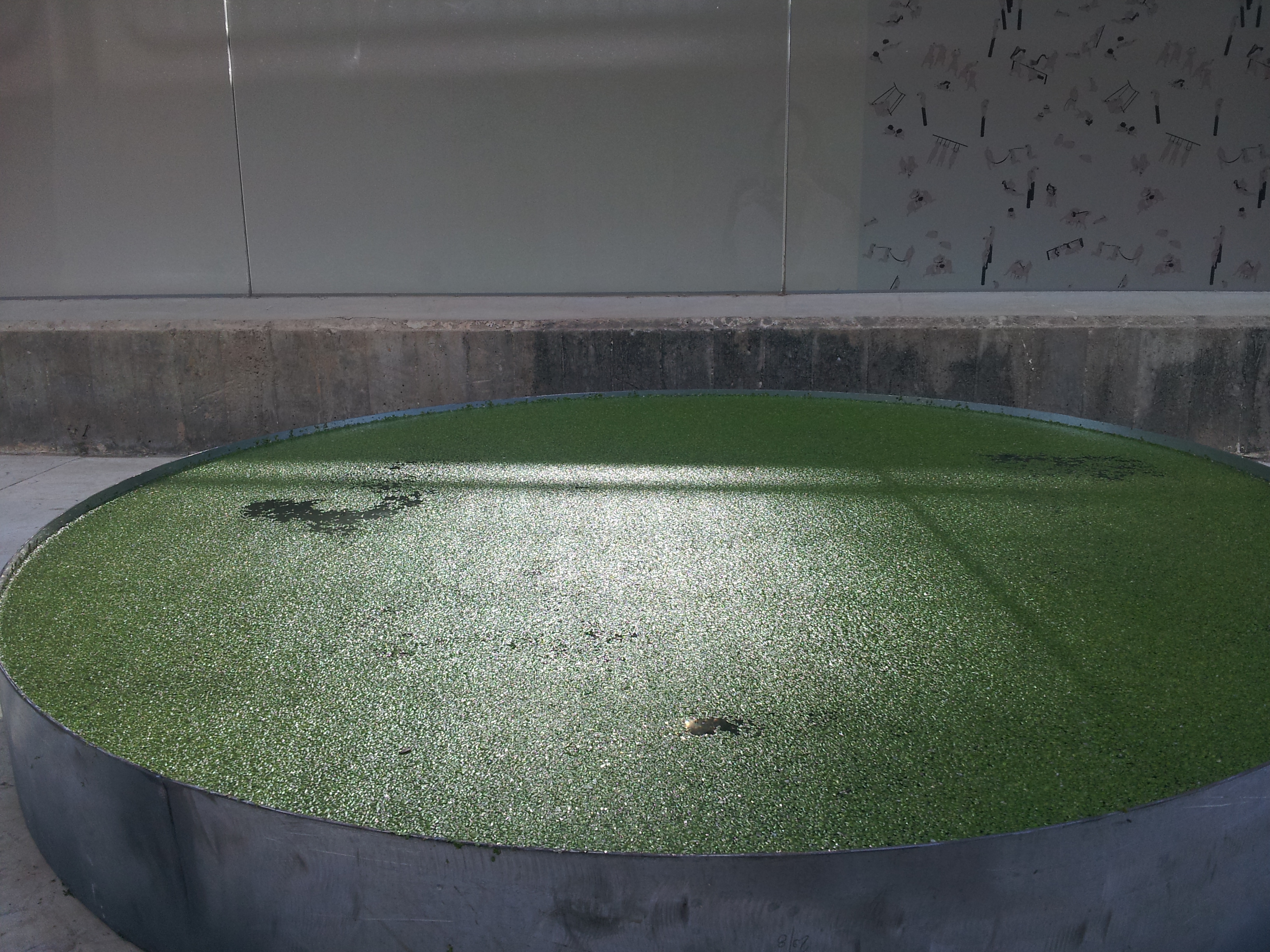
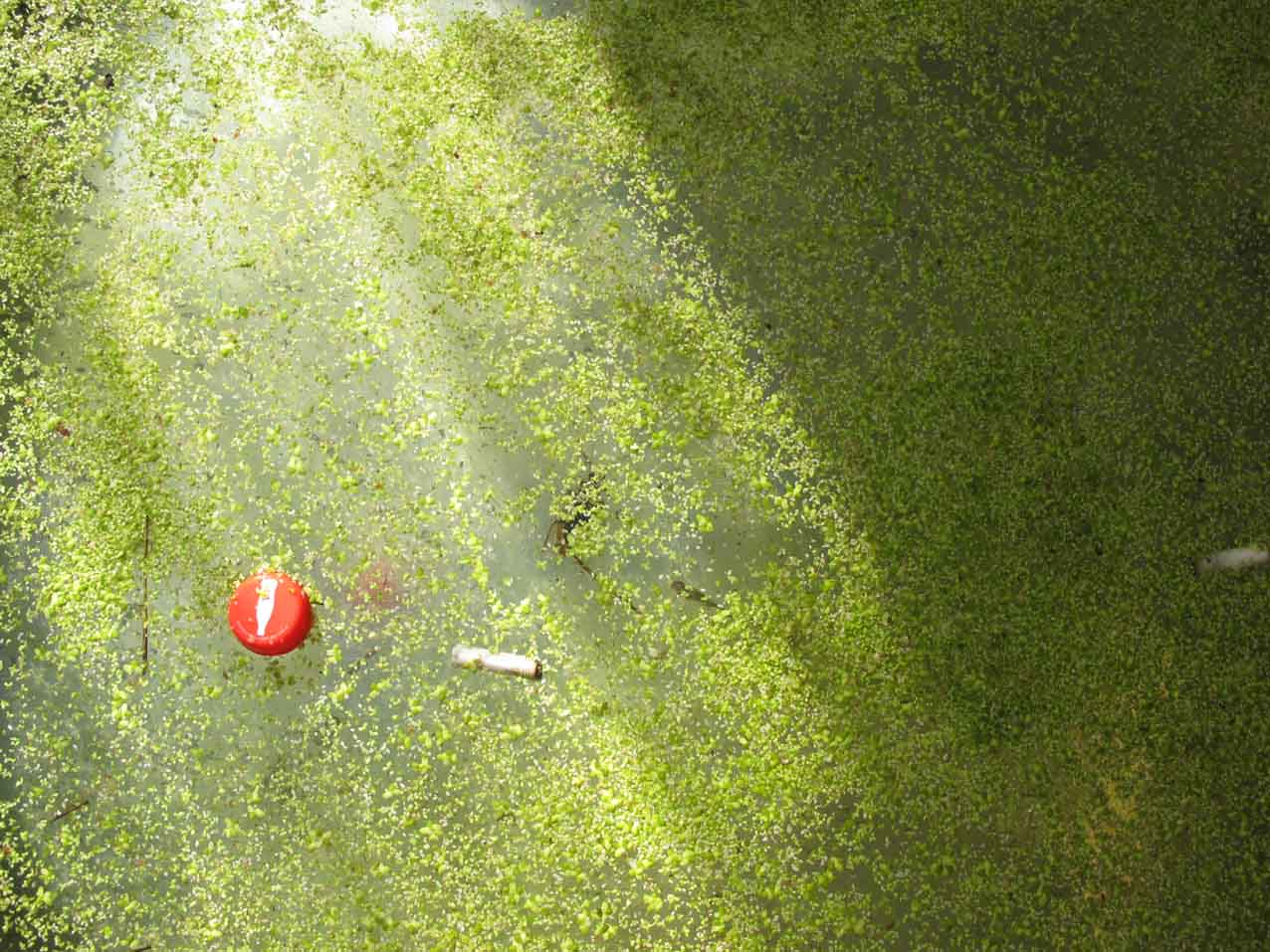
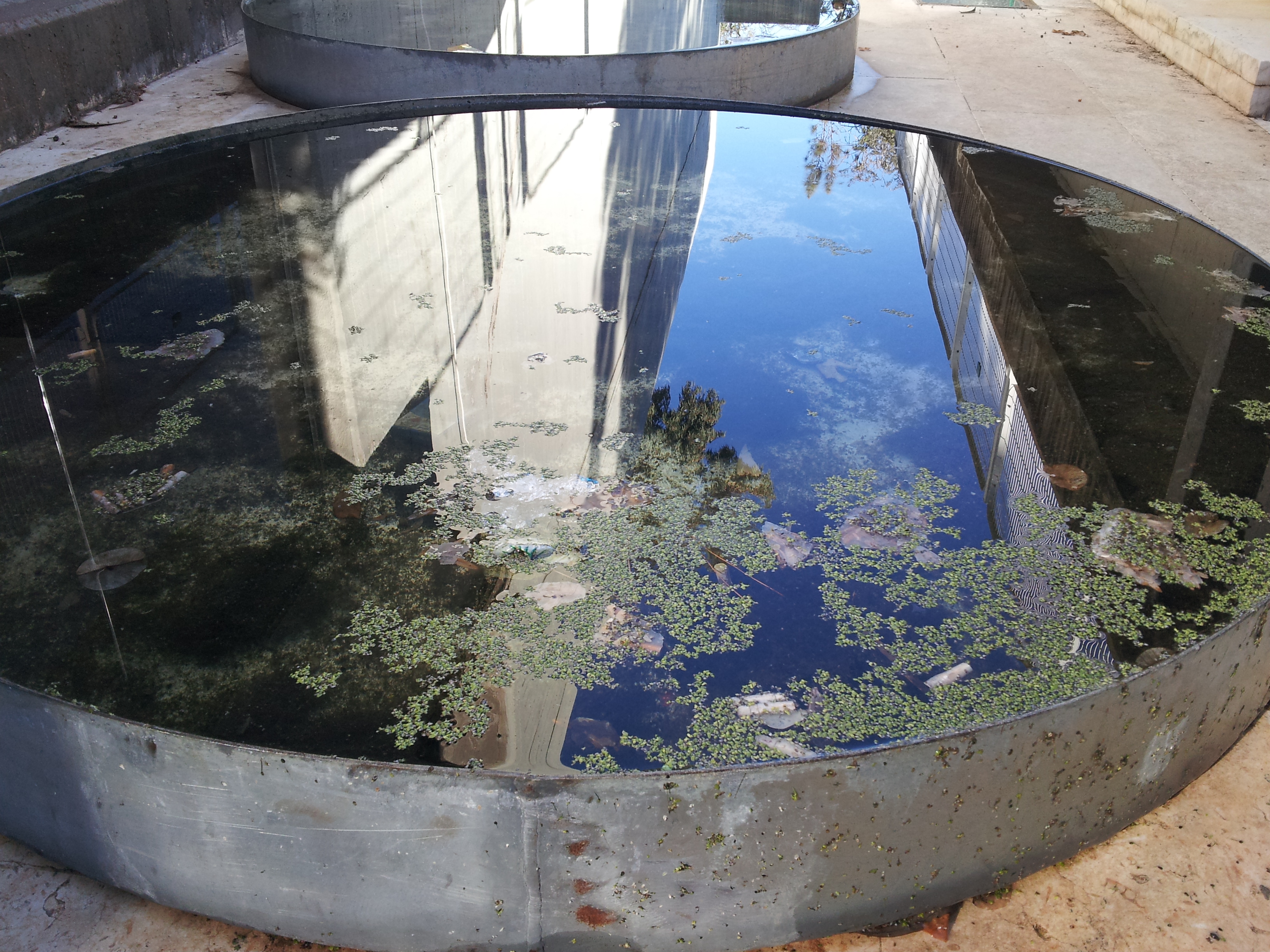
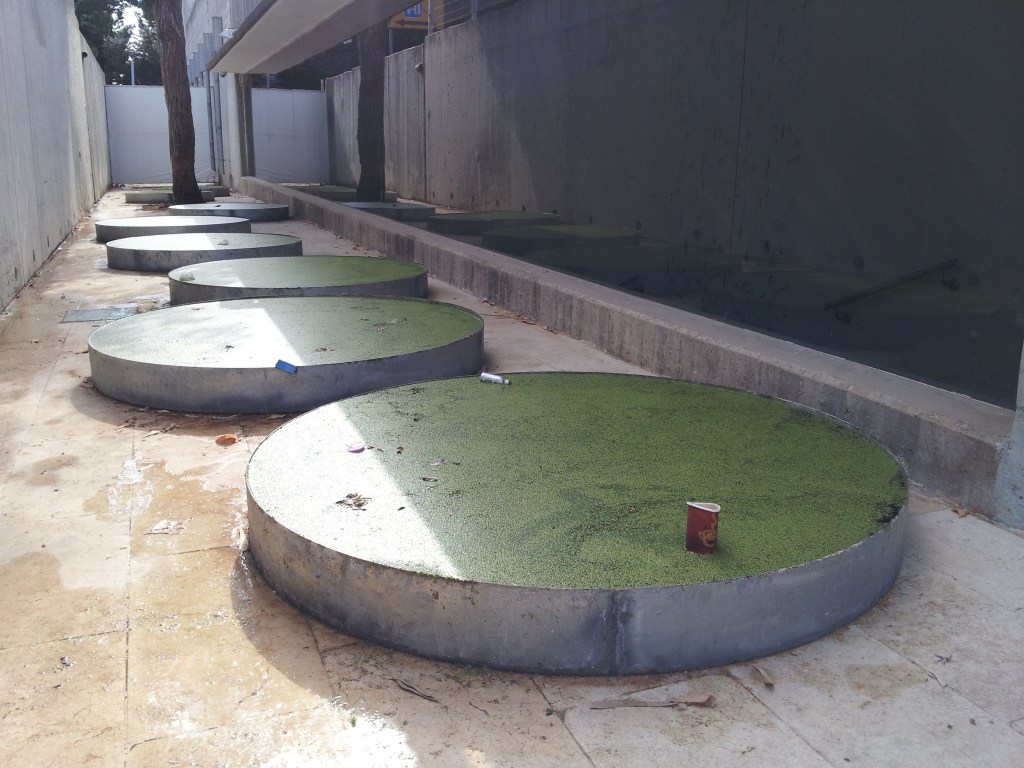
eight metal water ponds (110-120 cm. Diameter / 15 cm. height), Duckweed/water lenses (Lemnaceae), Mosquitofish (Gambusia affinis), pieces of waste and garbage
מיצב גן בתערוכה 'צרות של אחרים: קונפליקטים ופרדוקסים' במוזיאון הרצליה | ספטמבר – דצמבר 2013 | אוצרות: דורית לויטה הרטן, דליה לוין
מיכלי פח מגולוון (110-120 ס"מ קוטר, 15 ס"מ גובה), מים, צמחי עדשת מים, דגי גמבוזיה, וחלקי אשפה
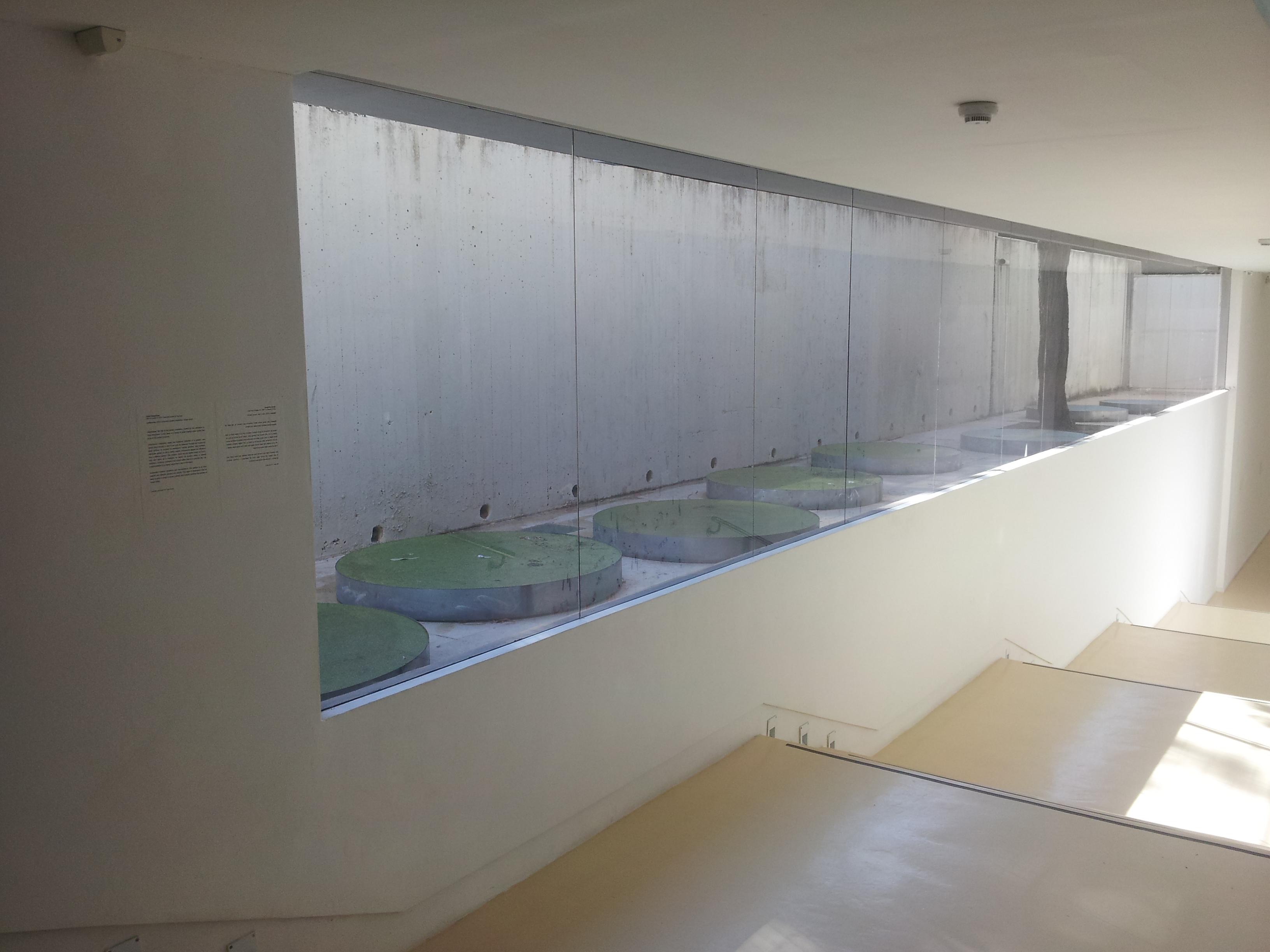
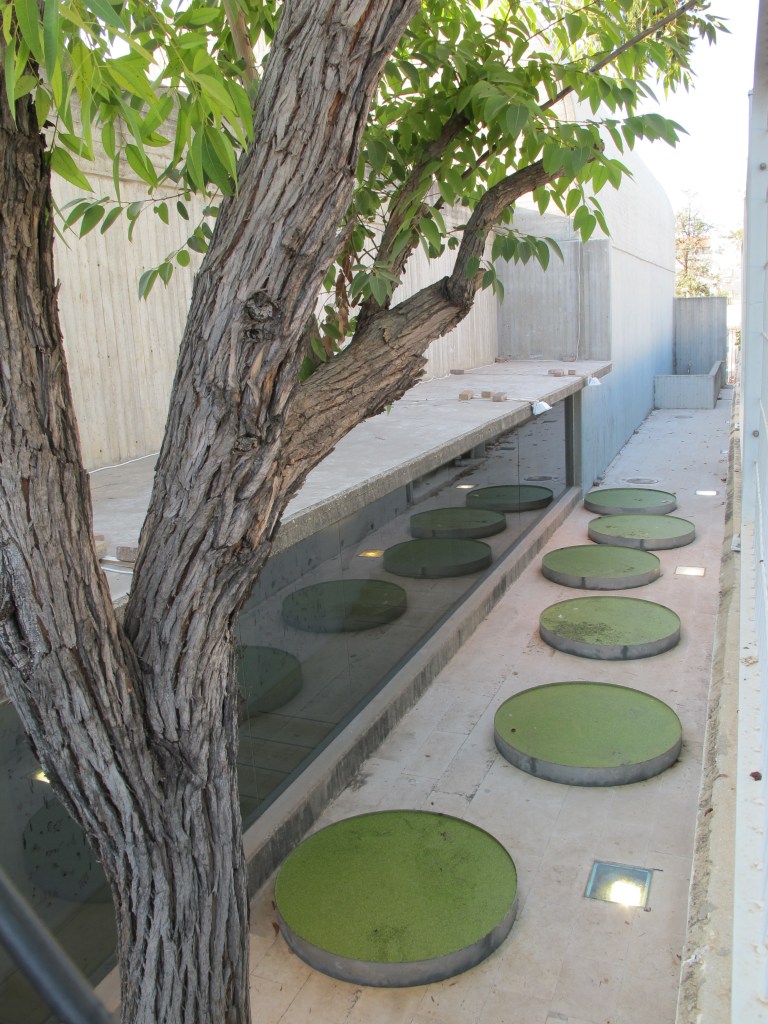
Lemnaceae (2013) is a garden installation composed of eight metal water ponds (water lenses, and garbage) and situated in a sunken, closed courtyard. The name Lemnaceae (an aquatic plant that floats on the surface of freshwater bodies) alludes to the paradox of (im)mobile garden. It addresses deterritorialization and its inherent conflicts not only through the dialectics of the temporal and (im)mobile, but also through notions of desire, the anamorphic view, and the mode of the diorama. These suggest that power and conflicts may be indirect, ambiguous, and elusive yet inherent to the idea of the garden. Taken together, they unfolded the idea of a nomadic garden – a garden without a territory – thus defying the idea of territoriality and power. The artwork Lemnaceae is the third art installation in the series of Gardens To Go. It draws on the concealed conflicts and unveiled power relations practiced in landscapes and gardens.
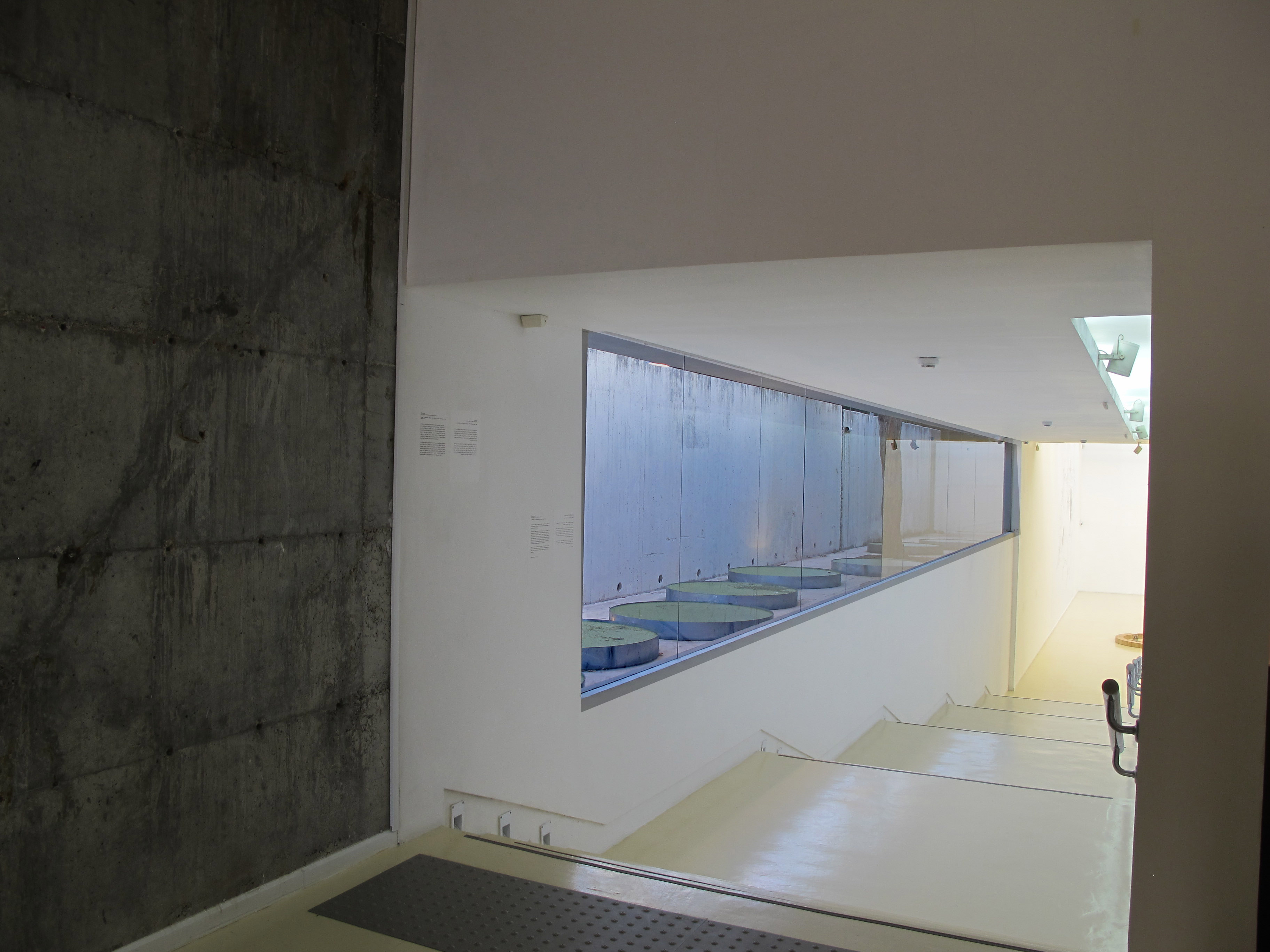
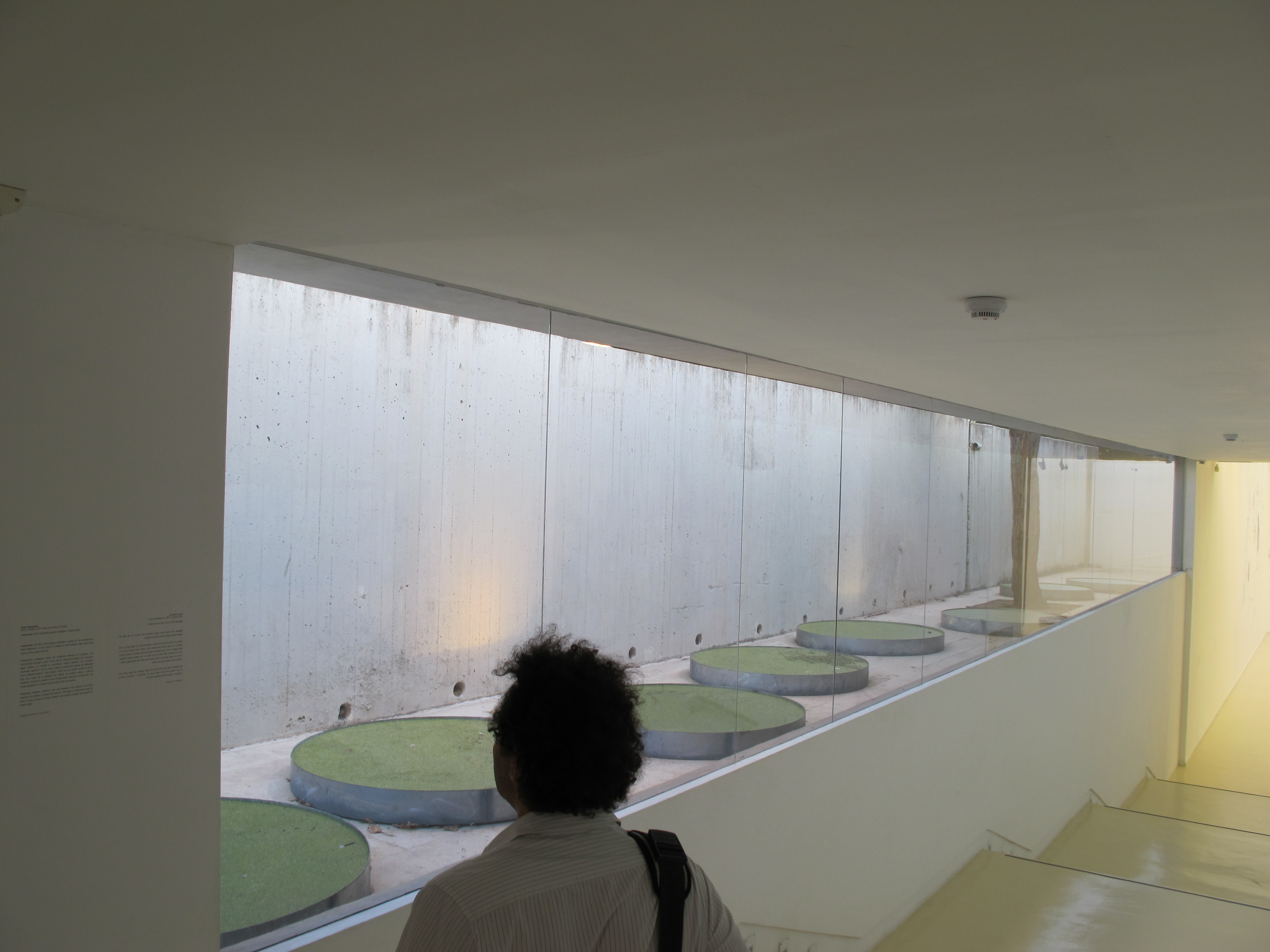
In Lemnaceae, positioning the ponds in the empty courtyard next to an existing Elm tree (Ulmus) enhanced the tensions of the temporal and the (im)mobile. It is even more noticeable considering the spatial proportions: the courtyard level is higher than the level inside the museum. As a result, the ponds are situated within the viewer's eye level, and appear as if floating and unconnected to the ground. This location within the open court between the museum and the street means that it is concurrently part of the museum and outside its main building, allowing a close yet detached parted view of the ponds. It evokes the discussion on desire, the anamorphic view, and the dioramic mode that relate to the spectator's experience, its changing point of view, and its relation to movement and desire that motivate that view.
When viewing the work while in movement, it either gradually disappeared when one was on his way downstairs or reappeared and was revealed on the way upstairs, amplifying the sense of floating, uncertainty, and disequilibrium. The natural movement and vision that generally occurs within a 'normal' garden were converted in this case by a vector of descending/ascending the stairs, producing a reversal of momentum and thus an inevitable disappearance/reappearance of the garden's sight. This momentum operated as an anamorphic mechanism of space in which perception depends on movement, therefore the sight of the garden was perceived from an enhanced perspective. The anamorphic vector of sight constituted through movement is motivated by the desire to capture the whole work in one sight (Žižek 1991; Weiss 1995: 39; Hildesheim 2020). In Lemnaceae, the level differences, the vector of movement, and the wide thick glass restricted the spectators from capturing the work as a whole, making them walk up and down the stairs and along the window, thus manipulating their move and gaze. The anamorphic mechanism prevented the spectators from achieving it hence the partially satisfied desire to see.
Observing the garden through the large window glass brings to mind the experience of looking at a scene displayed in a habitat dioramas exhibition, typical to museums of natural history. The viewers acquiesce to the illusion that the dioramas provide through the three-dimensional scene built within the narrow space of the displayed scene. The dioramas offer a reterritorialization of nature and landscape. Repositioned behind a window and heavily illuminated, nature and landscapes are then objectified and dramatized in the service of science. The habitat dioramas regulate the power relations between the viewers and the scene. In museums of natural history, dioramas not only order the spectators' view but also relate to power relations in the landscape by manifesting anthropocentric perception of nature and often also reveal a colonialist approach towards the displayed theme. The work Lemnaceae undertakes a similar convergence of art, gardens, and science. The dioramic modus in Lemnaceae evokes these power relations and a theatrical view of the garden's performance, a distanced perception of 'nature'/landscape. While performing a reterritorialization of (eight) ecosystems, it recalls the garden's origin as a cabinet of curiosities and its resonance in natural history museums, archeological museums, and botanical gardens (Graham 1993: 286-307; Garcia and Normand 2019: 141-150). The Dioramic gaze provokes the spectators' idea of the garden and its perception of the concealed subtle conflicts and dialectics it conveys.
על ארבעה קונפליקטים במיצב גן זמני
בין הזמני לקבוע: הקונפליקט של הנייד
למנסאיה הוא מיצב גן זמני. Lemnaceae היא עדשת מים, צמח רב שנתי זעיר הצף על פני המים במקווי מים עומדים בבריכות טבעיות או מלאכותיות. הדיסוננס המובלע בהגדרה מיצב-גן עולה מתוך הגדרתו של מיצב כעבודה בעלת משך זמן קצוב אל מול ההוויה של גן שהיא אל-זמנית. הבריכות הן לב הגן, המשתנה בהתאם למקום בו הן נמצאות, לפיכך הצבת העבודה בחצר האנגלית של המוזיאון הופכת את החלל לגן. בריכות המים אשר על פי רוב חפורות ומבוססות באדמה מובאות כאן במהלך מהופך כמנותקות וניידות. כך גם עדשות המים המרחפות על פני המים כחסרות שורשים. אל מול העץ הקיים הבריכות מייצרות מתח בין הזמני, הארעי והנייד לבין הקבוע והאל-זמני. העבודה מעלה את הדואליות והקונפליקט הפנימי של הישראליות הנעה בין התשוקה לקבוע לבין המשיכה לארעי – הארוס והתנטוס של הגן.
בין פנים לחוץ: הקונפליקט של המבט והמצב הדיוראמי
מהו גן שלא ניתן לשהות בו אלא להתבונן בו מבחוץ, מלמעלה, מהצד ומלמטה? האם פנים המוזיאון הוא החוץ של הגן? האם הגן הוא החוץ של המוזיאון? המבט אל הגן דרך קיר הזכוכית מתוך חלל מוזיאון מתברר כחוויה דיכוטומית של קרבה וריחוק. מיקום הגן בחצר האנגלית שבמפלס הביניים, תנועתם המנוגדת של המישורים הנעים אחד לעבר השני והמסות השקופות יוצרים חוסר שקט, תחושת ריחוק, ריחוף ואי יציבות. התנועה הטבעית לאורכו של הגן מומרת בירידה במדרגות ומייצרת היפוך מומנטים של היעלמות בלתי נמנעת. הטיול בגן שאינו מתאפשר מלכתחילה מומר בפרספקטיבה המתעוותת עד לנקודת ההיעלמות. מישור הגן ביחס למישור חלל הכניסה של המוזיאון ולמישור המדרגות יוצרים מערך אלכסוני המאפשר המשכיות של חלל הגן אל תוך המוזיאון ומבטים הנעים בין פנים לחוץ. זהו מצב דיוראמי בו הצופה מביט אל המרחב הנפתח מעבר לזכוכית עד שלא ברור עוד האם הגן הוא הדבר עצמו או הדמיה שלו. תשוקה לחושניות שלא באה על סיפוקה מצטמצמת לכדי מבט והתנועה לאורך חלון הזכוכית ובמורד המדרגות מוחלפת בהתנסות פיזית-גופנית והופכת מחוויה פנומנולוגית של הגן להתנסות טופולוגית כשהתנועה הלאה וקדימה מאיינת את המבט. בכיוון ההפוך, הטיפוס במעלה המדרגות מייצר מהלך של גילוי הגן, הנכחה שלו.
בין תרבות לטבע: הקונפליקט של הטבע השלישי
על פי התיאוריה Three Natures מהמאה ה-16 ישנם שלושה סוגי טבע; הראשון הוא הפראי, השני קשור בתרבות, חקלאות, עיור ותשתיות והטבע השלישי הוא הגן.[2] הגן הוא תמצית הדיאלקטיקה שבין תרבות לטבע. הוא הסובלימציה של פראות הטבע והוכחה לשליטה בו. הוא מרחב מוגדר או מגודר של טבע מתורבת, מלאכותי. גן הוא סוכן תרבות והיבריד של תרבות-טבע. בקונפליקט תרבות-טבע מוטמע גם הקונפליקט של המגדר: אם התרבות מיוחסת לגברי והטבע מיוחס לנשי הרי שהגן הוא הקוויר, המלאכותי והפרוורטי. המיצב למנסאי הוא ארגון מרחבי של ייצוגי טבע, אפיטומה של גן. יצירת הביטאט ואקוסיסטמה מעגלית ולכאורה שליטה מוגבלת בממד הטבע: עדשות המים זקוקות לאור אוויר ומים ההכרחיים להתפתחותן, הדגיגים זקוקים לאוויר ולביצי יתושים למחייתם והמים מתאדים. אולם, אין זו אקוסיסטמה מאוזנת וללא טיפול מתאים 'טבע' זה לא ישרוד. המערך האקולוגי של הגן תלוי כולו באיזון הדק שבין הטבע לתרבות. על פני המים ובתוכם שאריות אשפה ולכלוך, רמזים לנוכחות אנושית, שיירי תרבות צפים מתפוררים או שוקעים בבריכות המים ומתקבלים כרובד נוסף במחזור החיים של הגן.
בין אמנות לאדריכלות נוף: הקונפליקט של הקצוות הפרומים
בעוד האדריכלות מבקשת להיות קבועה, להגדיר מבטים, להכתיב כוריאוגרפיה, להיות פונקציונלית ברורה מוחלטת, האמנות משאירה מקום למחברים נוספים, משאירה את הקצוות פרומים.
עד למאה ה-20 אמנות הגן הייתה חלק מפנתיאון האמנויות היפות. אדריכלי הגנים le jardinières נתפסו כאמנים והגן, כתוצר תרבות, כארטיפקט. אולם נדמה כי הגן, שהפונקציונליות שלו נדמית לעיתים כמוגבלת, נדחק לשולי אדריכלות הנוף העכשווית. נדמה שכמעט ואין עוד מקום למהות הקונטמפלטיבית של הגן. כאן מוטמע קונפליקט סמוי נוסף: הקונפליקט של הווירטואליות. האדריכלות מייצרת מקום ומציאות ואילו הגן הוא אי-מקום non-place בעל תכונות מציאות מוגברת, ווירטואלית. המיצב למנסאיה מבקש לחזור אל ההוויה הרפלקסיבית של הגן במהלך דה-קונסטרוקטיבי הבוחן, תוך כדי פירוק והרכבה מחדש את הגן כמושג, מבנה מרחבי ומהלך פרשני.
** * **
[2] את התיאוריות הקשורות בשלושת סוגי הטבע פיתחו במקביל שני פילוסופים מהרנסנס, ,Bartolomeo Taegio בחיבורו LaVilla משנת 1559 והפילוסוף Jacopo Bonfadio במכתב משנת 1941. הגדרות אלו לשלושת סוגי הטבע קשורים ברעיון ומשמעות הגן ובתיאוריות של גנים. להרחבה ראו Hunt, J.H. (2000). Greater Perfection The Practice of Garden Theory, London: Thames & Hudson (pp.32-75)















 efrat hildesheim